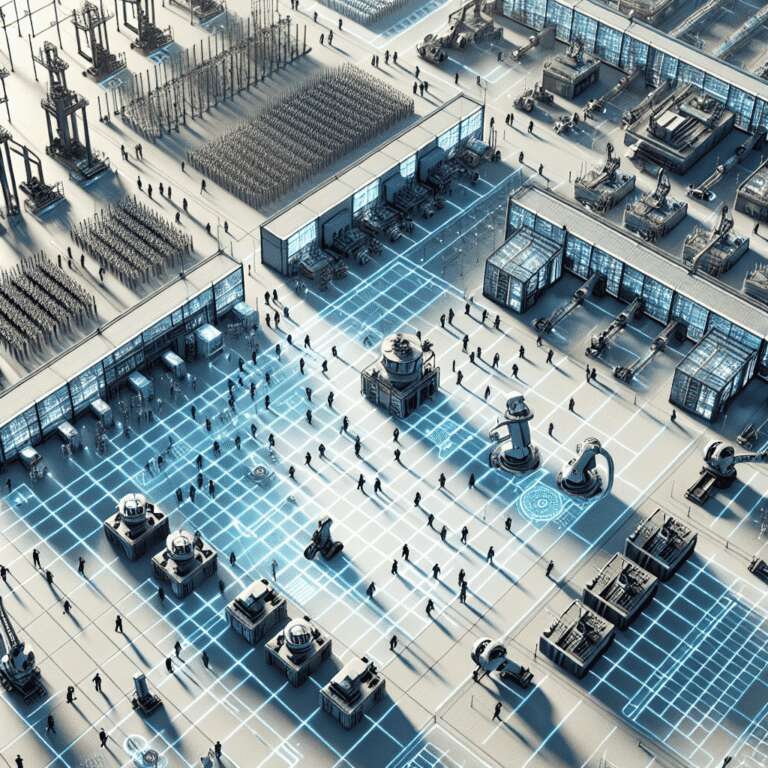
The Mega Omniverse Blueprint, now available in preview on build.nvidia.com, represents a major leap forward for simulating multi-robot fleets within industrial facility digital twins, addressing key challenges such as fragmented data pipelines and the need for high-fidelity, real-time simulations. Powered by Universal Scene Description (OpenUSD) and the NVIDIA Omniverse platform, this scalable reference architecture enables profound data interoperability, AI-driven decision-making, and real-time collaboration for enterprises aiming to streamline robotics and automation workflows.
Leading industry adopters like Accenture, Foxconn, Kenmec, KION, and Pegatron are deploying the Mega blueprint to fast-track the integration of physical Artificial Intelligence and autonomous systems in complex environments. At Hannover Messe, Accenture and Schaeffler showcased the blueprint in action, using it to test general-purpose humanoid robots such as Digit from Agility Robotics for material handling scenarios. Meanwhile, KION leverages Mega to optimize warehouse and distribution operations, and at the NVIDIA GTC conference, both Accenture and Foxconn discussed the deep operational impacts of these transformative digital twin-based solutions.
The Mega Blueprint’s comprehensive toolkit includes robust robot fleet simulation, digital twins for pre-deployment system validation, synthetic sensor data generation, and seamless facility and fleet management integration. Key features like ´robot brains as containers´, a world simulator with OpenUSD, Omniverse Cloud Sensor RTX APIs, and integrated video analytics AI agents provide a modular, scalable environment for testing, training, and deploying robotics in virtualized industrial settings. The latest Omniverse Kit SDK enhances these capabilities further, supporting advanced robotics application development and real-time simulation with RTX Real-Time 2.0.
Developers and 3D practitioners interested in these innovations can access free OpenUSD curricula and technical resources through NVIDIA’s learning platforms and engage with the OpenUSD community forums. NVIDIA’s upcoming events at COMPUTEX, as well as livestreams and technical blog content, offer additional insights into leveraging these tools for building next-generation industrial automation and Artificial Intelligence solutions.