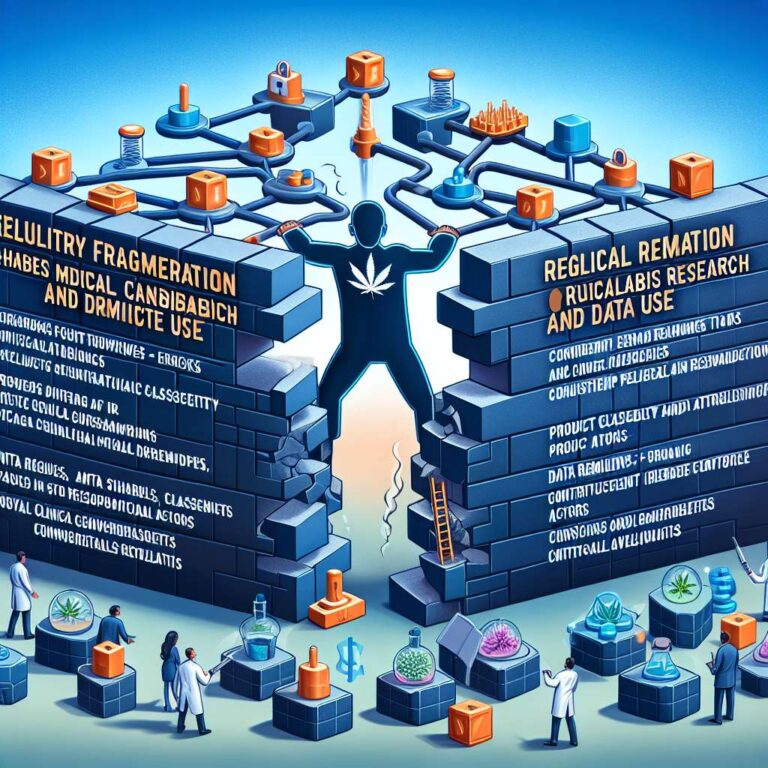
The article presents a regulatory review focused on medical cannabis in the United States and makes cross‑jurisdictional comparisons. It notes notable differences in how Cannabis is regulated in the United States versus EU regions and the United Kingdom. The text supplied does not include detailed statutory citations or case studies, but it establishes the review´s central aim: to map divergence in rules and to surface the consequences for research, data and technology uses tied to medical cannabis.
The review also calls attention to data and technology considerations that intersect with medical cannabis regulation. Specifically, it references Artificial Intelligence training and similar technologies, together with open access questions. The article highlights that regulatory variation across jurisdictions can create friction for building shared datasets, for harmonizing research protocols, and for deploying machine learning models that rely on cross‑border data. These points are raised without granular examples in the supplied excerpt, but they frame a broader conversation about governance, interoperability and the conditions necessary for reproducible research.
The piece frames its findings for a broad set of stakeholders. Policymakers, regulators, clinicians, researchers and commercial actors are all named implicitly as parties who must contend with regulatory fragmentation. The review underscores that divergent rules influence clinical access pathways, research approvals, data sharing permissions and commercial supply chains. It signals that alignment or clearer guidance could reduce uncertainty for those who develop technologies, curate datasets or provide patient care.
Finally, the article positions open access as a recurring theme tied to both regulation and technological innovation. It suggests that decisions about data openness, privacy and reuse will matter for future work that applies Artificial Intelligence to medical cannabis questions. The supplied material is limited in scope, but the review’s focus on comparative regulation and the intersections with data and technology sets an agenda for deeper analysis in a full-length treatment.