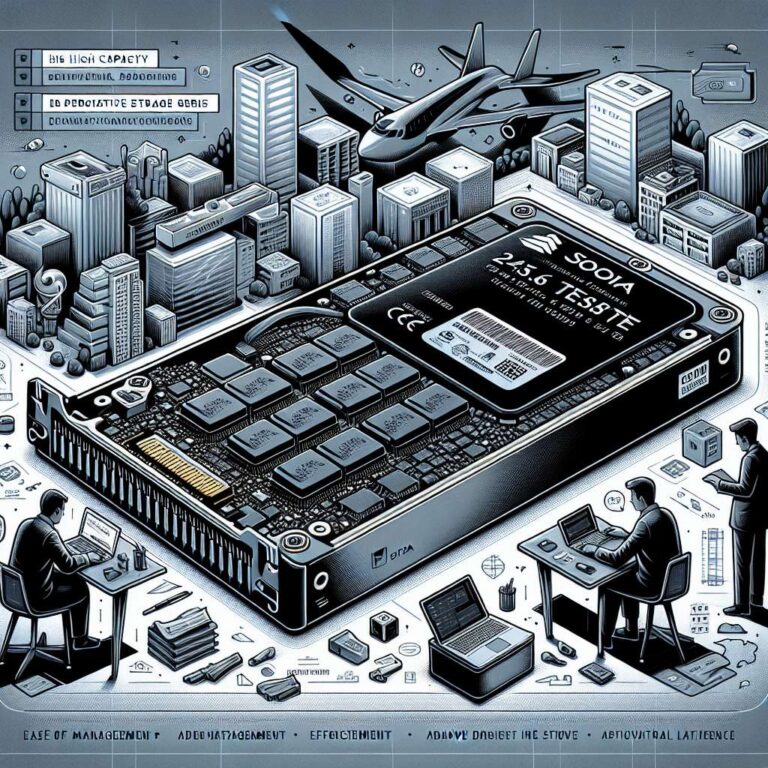
Kioxia Corporation has introduced a groundbreaking addition to its LC9 Series, unveiling the industry´s first 245.76 terabyte NVMe SSD, available in both 2.5-inch and EDSFF E3.L form factors. This significant capacity leap builds on its previous 122.88 TB model, reflecting the company´s commitment to addressing the surging storage needs of enterprises employing generative artificial intelligence technologies. The new SSD is engineered specifically to handle the unprecedented data volume and performance requirements arising from advanced artificial intelligence environments.
As generative artificial intelligence applications continue to proliferate, storage infrastructure faces mounting pressure to accelerate access to enormous datasets. Training large language models, generating embeddings, and maintaining vast vector databases for retrieval augmented generation are processes that fundamentally depend on highly reliable, high-capacity storage. Conventional solutions often fall short when tasked with the speed and efficiency needs of artificial intelligence-driven workflows. Kioxia´s new release aims to fill this critical gap by delivering both scale and performance, optimizing storage throughput for compute-intensive environments.
The LC9 Series expansion not only addresses raw storage density but also aligns with ongoing industry shifts toward more compact, high-efficiency enterprise storage formats like EDSFF. By targeting form factors embraced in modern data centers, Kioxia ensures ease of integration for organizations seeking to bolster their artificial intelligence infrastructure. This advancement is expected to empower companies engaged in machine learning, deep learning, and inference tasks, where the importance of scalable and responsive storage continues to rise. The SSD´s launch underscores a significant step forward in supporting the exponential data growth surrounding artificial intelligence research and deployment.