Jensen Huang framed Nvidia’s strategy around accelerated computing as a full-stack effort spanning software, systems, networking, storage, CPUs, and what he called Artificial Intelligence factories. He argued that the company’s long-running CUDA approach is expanding into more industries as Artificial Intelligence agents begin using software originally designed for people, including databases, productivity tools, and engineering applications. That shift, in his view, requires broad acceleration of existing software so agents can use those tools at machine speed. He emphasized that Nvidia’s goal is not to define itself against chips or CPUs, but to build whatever is necessary to accelerate applications and help customers deploy complete systems.
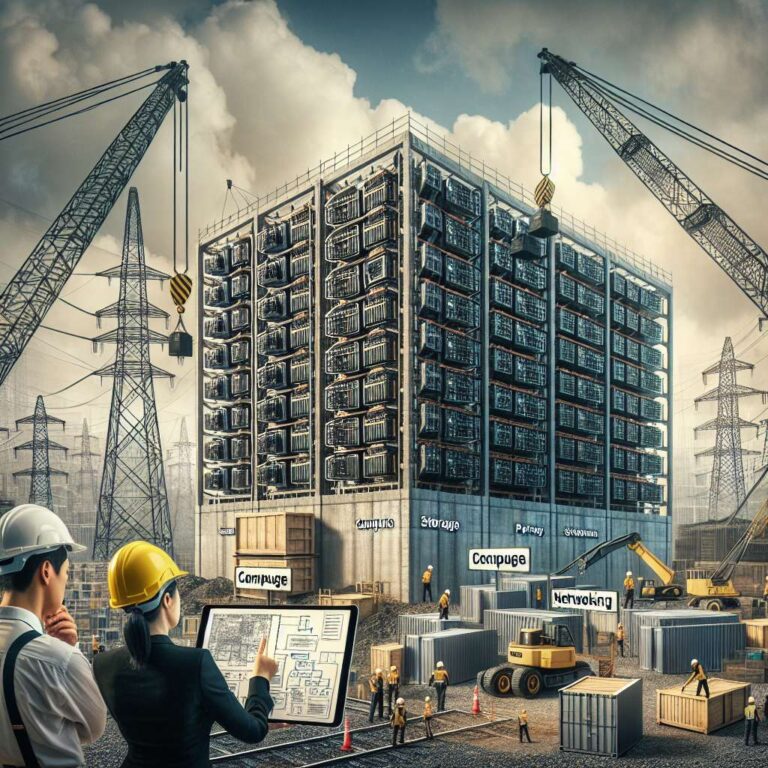
Huang tied that strategy to infrastructure economics. He said a gigawatt factory is probably $50, $60 billion. Out of that $50, $60 billion, probably about, call it $15, $17 or so, is infrastructure: land, power, and shell. The rest of it is compute and networking and storage and things like that. He argued that customers making investments at that scale need confidence that the hardware, software, and facility design will work as one integrated system. He also said Nvidia is planning for a very, very big year, and we’re planning for a very big year next year, but added that land, power, and shell remain the bottlenecks he most wants to see deployed faster.
On model development, Huang said language models are only one category of progress and argued that reasoning, retrieval, reflection, and tool use made Artificial Intelligence practical at scale. He described coding as a particularly important milestone because code must be grounded in execution rather than statistical plausibility. He said Nvidia’s software engineers 100% use coding agents now. Many of them haven’t generated a line of code in a while, but they’re super productive and super busy. He also pointed to new model architectures beyond transformers, including hybrid approaches and geometry-aware systems, as necessary for long-context reasoning, simulation, robotics, and other domains where discrete token generation is not enough.
Huang also explained why CPUs remain central in accelerated computing. He said modern cloud CPUs were optimized around rentable core counts, while agentic tool use increasingly demands high single-threaded performance and strong I/O so GPUs do not sit idle. He described Nvidia’s Vera design in those terms, saying Vera’s bandwidth-per-CPU core, bandwidth-per-CPU, is three times higher than any CPU that’s ever been designed. He also defended Nvidia’s Groq deal as a way to extend inference performance at the extreme edge of low latency and high token rates, particularly for coding agents, while keeping Nvidia’s broader heterogeneous infrastructure strategy intact.
On geopolitics, Huang warned that American leadership depends on competing across all layers of the Artificial Intelligence stack, not just models. He argued that China’s open source contributions and research depth make it a serious long-term competitor and said U.S. policy should ensure an American technology stack remains present in that market. He also criticized the influence of technology pessimists in Washington, saying fear-driven narratives are harming public attitudes toward Artificial Intelligence and could slow adoption in the United States during a critical industrial transition.