Enterprise artificial intelligence agents are emerging as one of the most consequential innovations for business operations, taking on repetitive tasks and managing workflows across functions such as IT, HR, customer service and operations. Early projects have proven effective within single domains, but many initiatives falter when organizations try to scale them more broadly. The fundamental obstacle is that agents are often designed as isolated systems that cannot share context or coordinate with other agents, models or platforms, which leads to duplicated work, miscommunication and digital bottlenecks that undercut their potential.
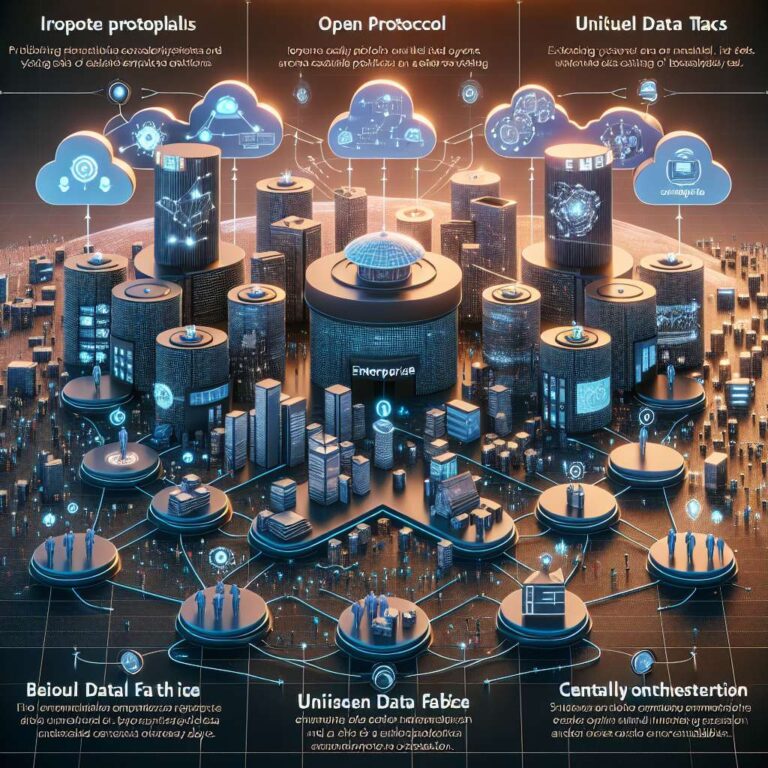
Interoperability is presented as the precondition for turning these islands of automation into enterprise-wide ecosystems. It is defined as the ability for agents to share context, exchange information and coordinate actions across systems, and it rests on three architectural elements: open protocols, unified data fabrics and centralized orchestration layers. Open protocols such as the Agent2Agent standard, or A2A, allow artificial intelligence agents to advertise capabilities, delegate tasks and coordinate workflows across vendors and underlying technologies. Unified data fabrics provide secure, real-time access to information without costly duplication, while orchestration layers supervise interactions so that collaboration is transparent, efficient and accountable. Together, these components enable agents to work together as seamlessly as human teams, turning fragmented gains into orchestrated intelligence that can span telecommunications networks, manufacturing operations or government services.
A deployment at Eaton, a multinational power management company with a workforce of 92,000 employees, illustrates how interoperability can shift artificial intelligence from pilots to an operating model. Facing rising demand for IT and HR services, Eaton moved beyond siloed bots by adopting interoperable agents powered by A2A, including agents to triage requests, retrieve policies and knowledge, and execute routine actions under a shared orchestration layer. The company reported faster resolution times, fewer tickets and a more conversational, proactive experience for employees, characterizing the change as moving from one-off automation to a recipe that combines agents, workflows and generative artificial intelligence. The account stresses that success depended not only on technology but also on strong data quality, governance processes and a clear return-on-investment lens that built support for expansion. The discussion concludes that interoperability must be paired with robust governance, including explainability, auditability and leader intervention, and that protocols such as A2A should embed enterprise-grade authentication and auditing. Organizations that adopt open standards and prioritize these safeguards are portrayed as best positioned to build scalable, trustworthy, artificial intelligence powered operating models in which human teams and interconnected agents collaborate responsibly.