Intel CEO Lip-Bu Tan faced an unexpected crisis when President Trump attacked him on social media, declaring, “The CEO of INTEL is highly CONFLICTED and must resign, immediately,” due to Tan’s extensive investment history in China, including some links to the country’s military. Despite having had little direct engagement with Trump compared to other technology leaders from Nvidia, AMD, OpenAI, Amazon, Google and Palantir, Intel quickly moved to arrange a meeting, seeing it as crucial to both Tan’s position and the company’s future. The episode unfolded as Intel struggled with years of manufacturing setbacks, foreign competitors gaining ground, and a delayed $28 billion factory project in Licking County now pushed to 2030 or 2031.
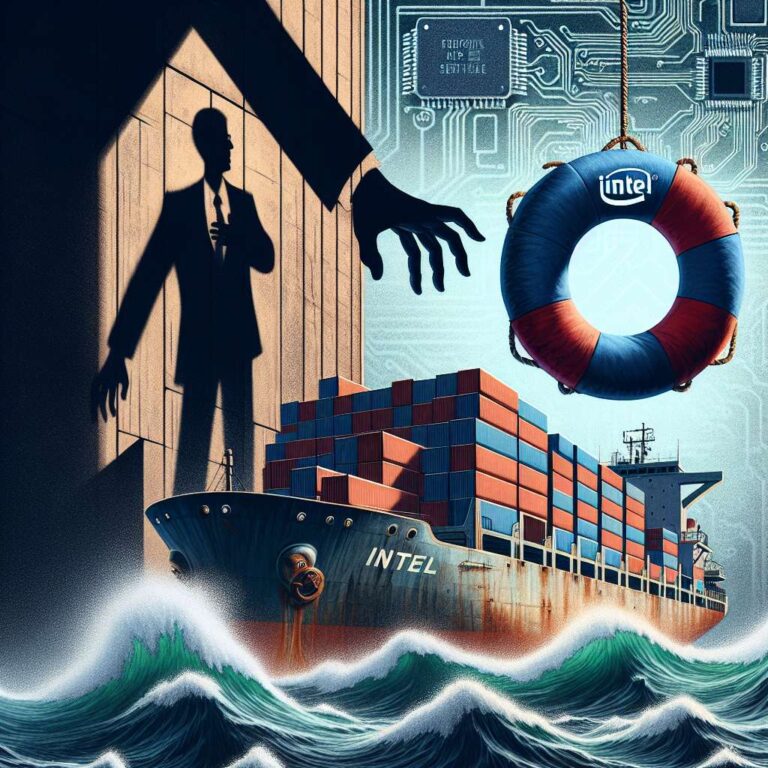
In preparation for the Oval Office meeting, Tan sought advice from allies such as Microsoft CEO Satya Nadella and Nvidia CEO Jensen Huang, and strategized with advisors on proving his commitment to the United States while addressing his China holdings. Inside the White House, with Commerce Secretary Howard Lutnick and Treasury Secretary Scott Bessent present, Trump pressed Tan on how he intended to revive Intel. Tan had previously told Lutnick he did not want billions in CHIPS Act grants, and when Trump floated the idea of the U.S. taking equity in exchange for more CHIPS Act money, Tan agreed. The resulting deal gave Intel a $5.7 billion cash infusion, made the U.S. government its largest shareholder, and prompted Tan to pledge to “make Intel great again,” a move technology lobbyist Adam Kovacevich later called a “lifeline” that may have saved both the company and Tan’s job.
The White House investment triggered a broader wave of dealmaking and influence. Within weeks, Tan closed a $5 billion partnership with Nvidia, whose CEO Huang called him a “long-time friend,” and the same week Intel announced a $2 billion investment from Masayoshi Son’s SoftBank, where Tan had once served on the board. Trump celebrated the Nvidia agreement by posting an artificial intelligence generated image of himself watching Intel’s stock rise and highlighting that the value of the U.S. stake had increased by 50% after Nvidia’s investment. Tan, a veteran venture capitalist with an estimated personal fortune well above $500 million and some 600 investments in China, used his dealmaking skills to shake up Intel’s management, cut around 15% of employees, and flatten the organization, even as some insiders questioned his technical depth and his continued involvement with outside investment firms, issues that had already led Intel’s board to push back on at least one acquisition.
Inside the company, Tan bypassed layers of management to hear directly from engineers, elevated long-time Intel technologist Pushkar Ranade to interim chief technology officer, and worked daily on transforming the culture into a more engineering-centric, customer-focused operation, according to the company. Yet Intel’s core manufacturing challenges have persisted. Its factories require an estimated $20 billion or more to attract customers at scale, and its advanced process known as 18A has struggled to convert interest into concrete deals, with Nvidia testing but not moving forward on using 18A for its chips. A Commerce Department official insisted that the U.S. equity stake gives Intel a chance at success but not a guaranteed advantage, even as foreign chipmakers operating in the United States worry the government could quietly steer customers toward Intel. As Tan juggles his role as a “highly engaged CEO” with a long venture capital legacy, Intel’s share price has risen around 80% since his appointment, but the company still must prove it can deliver competitive manufacturing and a winning artificial intelligence strategy to justify the bold government bet.