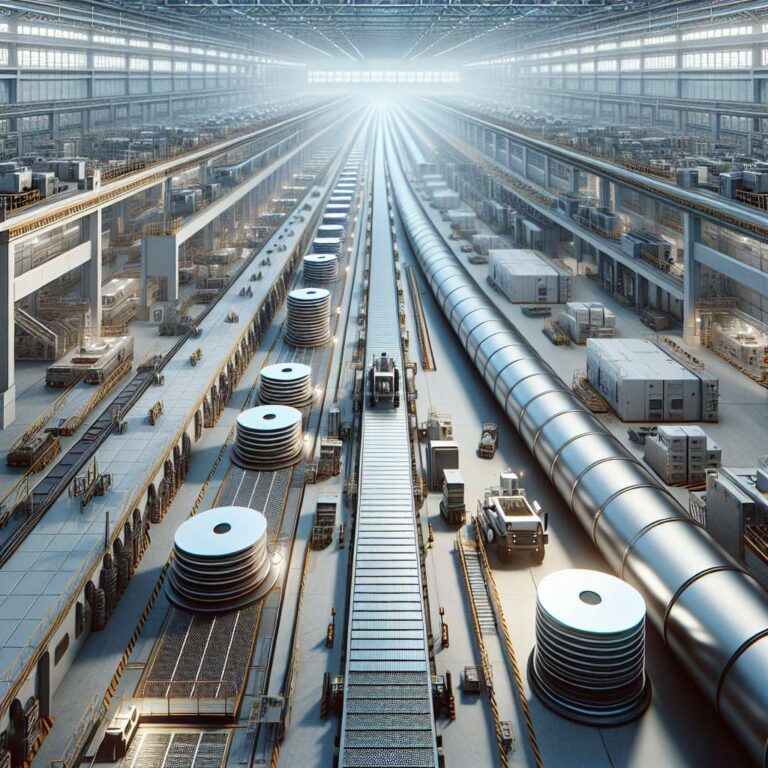
Intel has joined Elon Musk’s Terafab project, an initiative spanning Tesla, SpaceX, and xAI that is focused on building large-scale chip manufacturing capacity for Artificial Intelligence. Intel said it is joining the effort to help refactor silicon fab technology, contributing its design, fabrication, and packaging capabilities to a model aimed at producing compute at much greater scale rather than relying only on incremental supply increases.
In a statement posted on X today (April 7), Intel said it is “proud to join the Terafab project” alongside SpaceX, xAI, and Tesla “to help refactor silicon fab technology,” adding that its ability to design, fabricate, and package high-performance chips at scale will support the initiative’s goal of producing one terawatt of compute annually for Artificial Intelligence and robotics. The project is centered on a planned advanced fabrication facility in Austin, Texas, intended to manufacture chips for uses including autonomous vehicles, humanoid robots, and potentially space-based compute systems. SpaceX described the effort as combining logic, memory, and advanced packaging under one roof.
Terafab highlights a broader change in the infrastructure race around Artificial Intelligence. For the past two years, the main constraint has been access to GPUs, with companies competing for supply through cloud providers and chip vendors. The Terafab model points instead toward control over how compute is produced, scaled, and allocated. That approach leans on vertical integration, linking chip design, fabrication, and packaging more directly to end demand and moving away from the traditional globally distributed semiconductor supply chain.
Intel’s role is significant because advanced semiconductor manufacturing at scale requires experience that few companies have, and Intel remains one of the only US-based firms with that background. The partnership also comes as Intel works to restore confidence in its manufacturing execution after leadership turmoil in 2025, when CEO Pat Gelsinger was forced out. The arrangement creates an opportunity to show discipline and execution in a highly visible project, while also exposing Intel to the risks of one of the market’s most aggressive infrastructure bets.
The initiative also reflects a diverging strategy from the broader market. Hyperscalers are still focused on securing supply from established vendors and distributing infrastructure through the cloud, while most enterprises continue to consume external infrastructure. Musk’s companies are moving toward tighter alignment between compute demand and production, even though Tesla and SpaceX still rely on suppliers such as Nvidia in the near term. More ambitious goals, including space-based data centers and “galactic-scale computing,” remain distant because of major technical and economic barriers. Immediate demand for reliable compute is far more pressing, making the near-term push to align production and demand the most consequential part of the strategy.