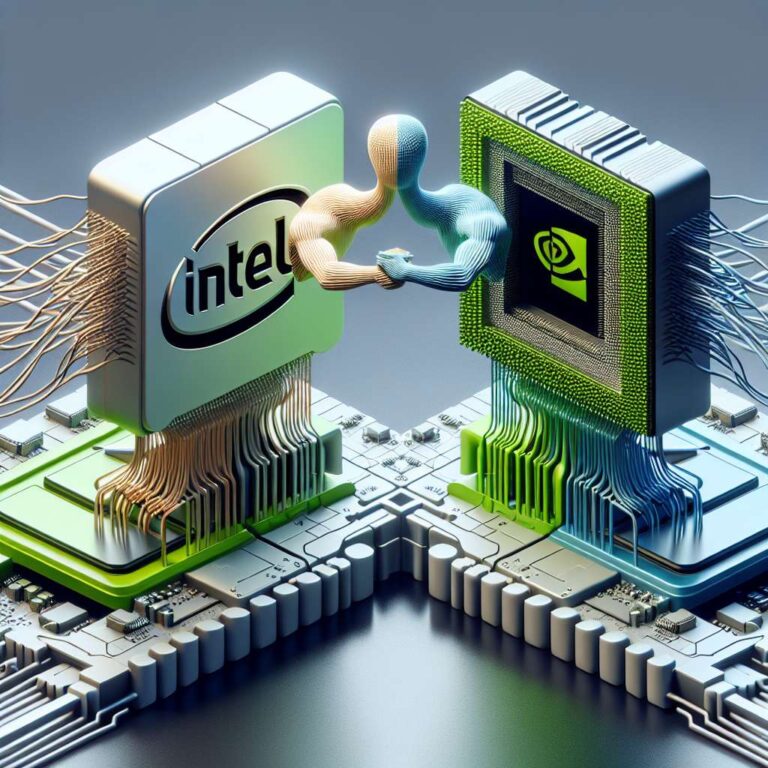
Intel has completed the long-anticipated $5 billion investment from Nvidia, a deal the companies first outlined in mid-September as part of a broad custom hardware collaboration. In a filing with the Securities and Exchange Commission, Intel said it sold more than 214.7 million shares of its common stock to Nvidia for $23.28 per share, for an aggregate of $5 billion. The filing noted that the per share price was significantly lower than the approximately $36 per share price Intel’s stock was trading for at the time of the Securities and Exchange Commission filing on the sale.
The investment was originally priced in line with Intel’s mid-September share price and is tied to joint development of custom data center and personal computing hardware. Intel said the work includes connecting Nvidia and Intel architectures using Nvidia’s NVLink interconnect, with Intel set to build custom x86 central processing units that integrate into Nvidia Artificial Intelligence infrastructure platforms. On the personal computing side, Intel will produce x86 system on chips that integrate with Nvidia RTX graphics processing unit chiplets for use in personal computers. Intel’s stock has since seen trading activity above $35 per share, which underscores how the timing of the transaction has favored Nvidia.
The Nvidia deal followed a major intervention by the United States government, which took a 9.9% stake in Intel with an option to purchase another 5%. That investment, which came after a high profile battle with President Donald Trump, included $5.7 billion from funds that would have been awarded through the CHIPS Act, and $3.2 billion from funds under the Secure Enclave program. Buoyed by this combined public and private backing, Intel has moved aggressively to reorient its operations, including potentially maintaining its Networks and Edge Group to more tightly integrate silicon, software, and systems. The company framed these moves as central to pursuing opportunities across Artificial Intelligence, data center workloads, and edge computing.