
Intel closes Nvidia’s $5 billion strategic investment in custom chips

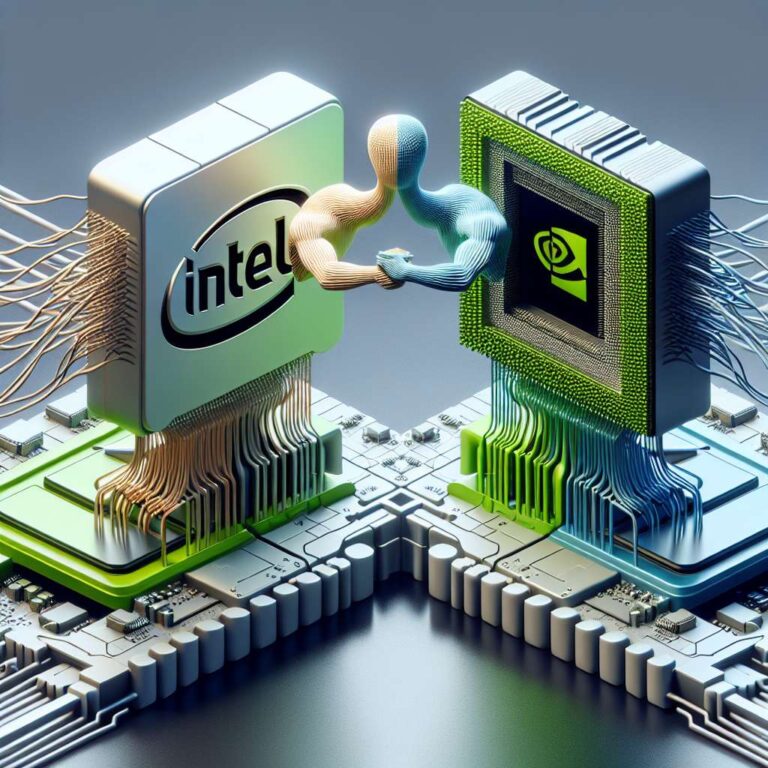
Intel has completed Nvidia’s previously announced $5 billion share purchase, cementing a broad collaboration on custom data center and PC hardware that links the companies’ architectures and strengthens Intel’s manufacturing roadmap.

Intel has completed the long-anticipated $5 billion investment from Nvidia, a deal the companies first outlined in mid-September as part of a broad custom hardware collaboration. In a filing with the Securities and Exchange Commission, Intel said it sold more than 214.7 million shares of its common stock to Nvidia for $23.28 per share, for an aggregate of $5 billion. The filing noted that the per share price was significantly lower than the approximately $36 per share price Intel’s stock was trading for at the time of the Securities and Exchange Commission filing on the sale.

The investment was originally priced in line with Intel’s mid-September share price and is tied to joint development of custom data center and personal computing hardware. Intel said the work includes connecting Nvidia and Intel architectures using Nvidia’s NVLink interconnect, with Intel set to build custom x86 central processing units that integrate into Nvidia Artificial Intelligence infrastructure platforms. On the personal computing side, Intel will produce x86 system on chips that integrate with Nvidia RTX graphics processing unit chiplets for use in personal computers. Intel’s stock has since seen trading activity above $35 per share, which underscores how the timing of the transaction has favored Nvidia.

The Nvidia deal followed a major intervention by the United States government, which took a 9.9% stake in Intel with an option to purchase another 5%. That investment, which came after a high profile battle with President Donald Trump, included $5.7 billion from funds that would have been awarded through the CHIPS Act, and $3.2 billion from funds under the Secure Enclave program. Buoyed by this combined public and private backing, Intel has moved aggressively to reorient its operations, including potentially maintaining its Networks and Edge Group to more tightly integrate silicon, software, and systems. The company framed these moves as central to pursuing opportunities across Artificial Intelligence, data center workloads, and edge computing.
70

Impact Score

Report finds California creative job losses are not driven by Artificial Intelligence

New research from Otis College of Art and Design finds California’s recent creative industry job losses stem from cost pressures and structural shifts, not direct worker displacement by generative Artificial Intelligence. The technology is changing workflows and expectations, but it is largely replacing tasks rather than entire jobs.

U.S. senators propose broader chip tool export ban for Chinese firms

A bipartisan proposal in the U.S. Senate would shift semiconductor equipment controls from specific fabs to targeted Chinese companies and their affiliates. The measure is aimed at cutting off access to advanced lithography and other wafer fabrication tools for firms such as Huawei, SMIC, YMTC, CXMT, and Hua Hong.

Trump executive order targets state Artificial Intelligence laws

Executive Order 14365 lays out a federal strategy to discourage, challenge, and potentially preempt state Artificial Intelligence laws viewed as burdensome. Employers are advised to keep complying with current state and local rules while preparing for regulatory uncertainty in 2026.

Who decides how America uses Artificial Intelligence in war

Stanford experts are divided over how the United States should govern Artificial Intelligence in defense, surveillance, and warfare. Their views converge on one point: decisions with such high stakes cannot be left to companies alone.

GPUBreach bypasses IOMMU on GDDR6-based NVIDIA GPUs

Researchers from the University of Toronto describe GPUBreach, a rowhammer attack against GDDR6-based NVIDIA GPUs that can bypass IOMMU protections. The technique enables CPU-side privilege escalation by abusing trusted GPU driver behavior on the host system.

Contact Us

Got questions? Use the form to contact us.

Contact Form

Clicking next sends a verification code to your email. After verifying, you can enter your message.