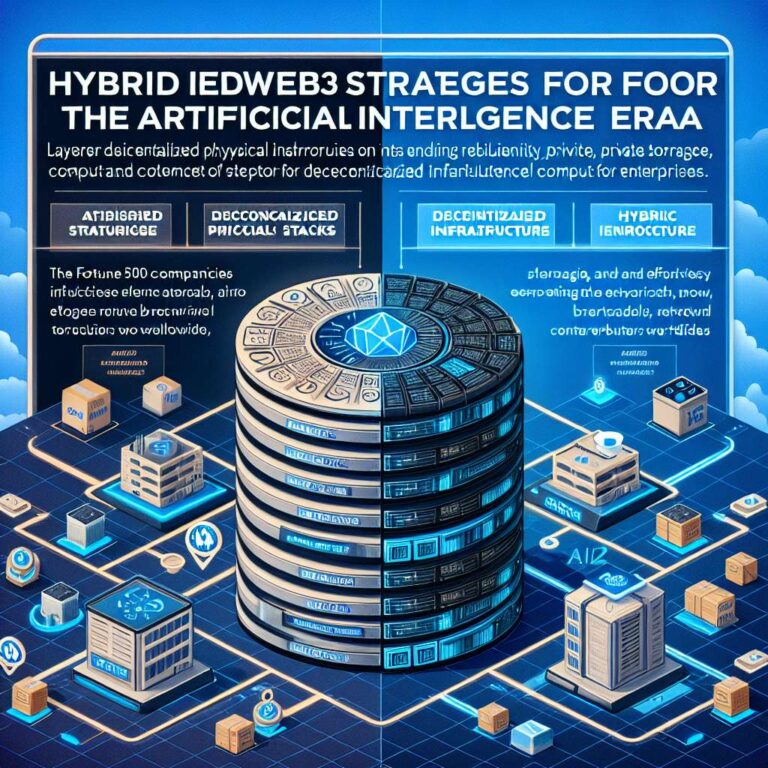
The article explores how the original vision of “Web 3.0” as a user-controlled internet without centralized servers or intermediaries is beginning to materialize, even as Web2 platforms still dominate. Web3 reverses the Web2 model of data and compute controlled by a small group of global conglomerates, instead decentralizing these resources through blockchain and peer-to-peer networks. Six out of ten Fortune 500 companies are exploring blockchain-based solutions, often through hybrid deployments that combine traditional Web2 models and infrastructure with decentralized Web3 technologies for cloud, supply chain, and financial services use cases.
A key proponent of this hybrid approach is Erman Tjiputra, founder and CEO of AIOZ Network, which builds Web3 infrastructure using decentralized physical infrastructure networks. He highlights advantages for enterprises such as stronger ownership and control of sensitive data, more cost-effective compute, and enhanced security and privacy in a hostile cyberthreat environment. The approach can also reduce outages from single points of failure that cause downtime, data loss, and revenue deficits. Tjiputra frames the most compelling opportunity as the ability to build and scale artificial intelligence more reliably and affordably by tapping into people-powered infrastructure that facilitates shared bandwidth, storage, and processing power for artificial intelligence inference, model training, and data storage, all supported by familiar developer tools and open, usage-based incentives.
The article notes that AIOZ Network launched a distributed compute platform and marketplace in 2025 where developers and enterprises can access and monetize artificial intelligence assets, and run artificial intelligence workloads on more than 300,000 contributing devices, avoiding opaque datasets, models, and centralized lock in. However, systemic barriers still slow Web3 adoption at scale, including fragmented blockchains that obstruct interoperability and force reliance on vulnerable cross-chain bridges. Regulatory uncertainty adds friction when outdated frameworks clash with decentralized architectures, especially in data protection and anti-money laundering contexts. User experience remains a major setback, as irreversible key loss or compromise can permanently block asset access, unlike recoverable Web2 credentials.
To bridge these gaps, the article describes how decentralized physical infrastructure networks enable enterprises to phase into Web3 without a full migration, reducing risk while capturing benefits. AIOZ Network offers media streaming, artificial intelligence compute, and distributed storage that can plug into existing Web2 stacks, including AIOZ Storage, a scalable distributed object storage system built on a global contributor network and compatible with common storage systems and web APIs. Developers using tools like Amazon S3 Storage or REST APIs can simply repoint endpoints, and the same simple REST approach applies to media transcoding and streaming. Built on Cosmos and an Ethereum Virtual Machine framework, AIOZ prioritizes interoperability so applications operate across chains without developers managing consensus details. This hybrid model, combining Web2 and Web3 strengths, reflects a broader ambition for a peer-to-peer, people-powered internet with fewer single points of failure, where distributed compute and storage deliver cost efficiency and end-to-end security. While Web3 is still in its early stages and not yet rivaling Web2 giants, its commercial advantages in an era of artificial intelligence are becoming more difficult for enterprises and developers to ignore.