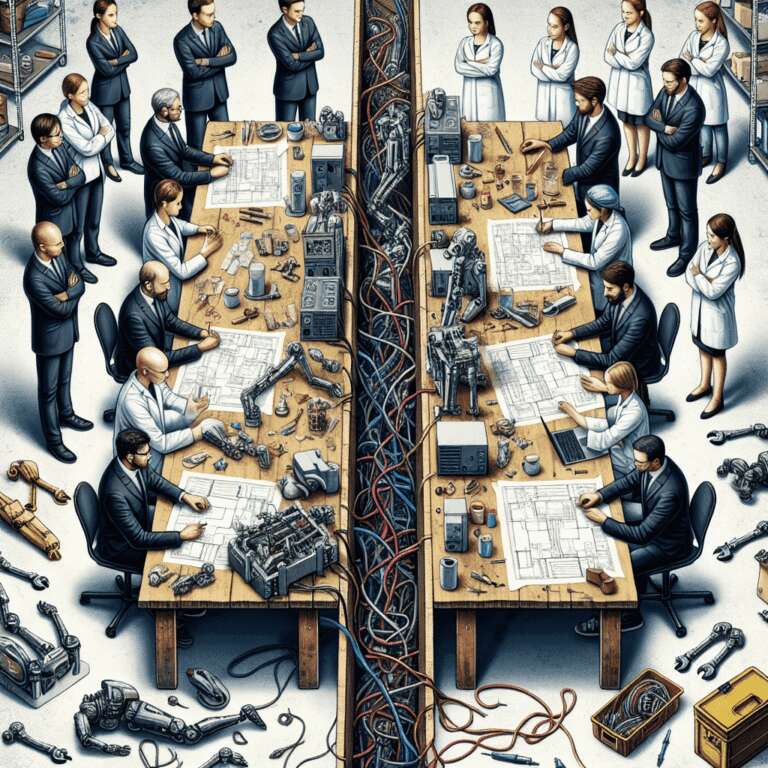
At a recent Boston robotics expo, Daniela Rus, a leading expert in robotics, dispelled the notion that humanoid robots powered by Artificial Intelligence are already transforming industries at scale. Despite substantial investments and forecasts – including Bank of America´s prediction of a billion humanoids in the workforce by 2050 – the reality is far from the hype. Rus demonstrated that most humanoids remain limited in both intelligence and common sense, highlighting scenarios where robots misinterpret human intent due to gaps in contextual understanding.
Industry insiders, such as Pras Velagapudi of Agility Robotics, discussed additional physical and engineering challenges. Powerful humanoids require bulky batteries, which impact operational time and raise safety concerns, while manufacturing complexity continues to limit rapid deployment. Even impressive demonstrations, such as dexterous hands or conversational abilities using large language models, often fail to translate into viable solutions for real-world industrial tasks, where detailed programming may be more practical than natural language interaction.
Ambitious startups like Figure AI have captured the attention of investors and partnered with automakers like BMW, but questions remain over the scale and substance of these collaborations. Tensions surfaced publicly when Figure AI challenged media reports on its BMW partnership, sparking disputes over the progress and scope of humanoid integration. Underlying this are contrasting attitudes between patient roboticists, who recall slow adoption curves for previous automation waves, and venture capitalists eager for rapid returns. Experts remain skeptical that current humanoid technology will reach widespread, cross-industry use soon, pointing to ongoing challenges from regulation to technical limitations. While investment and public interest remain high, the actual impact and timeline for humanoids in the workforce look markedly uncertain.