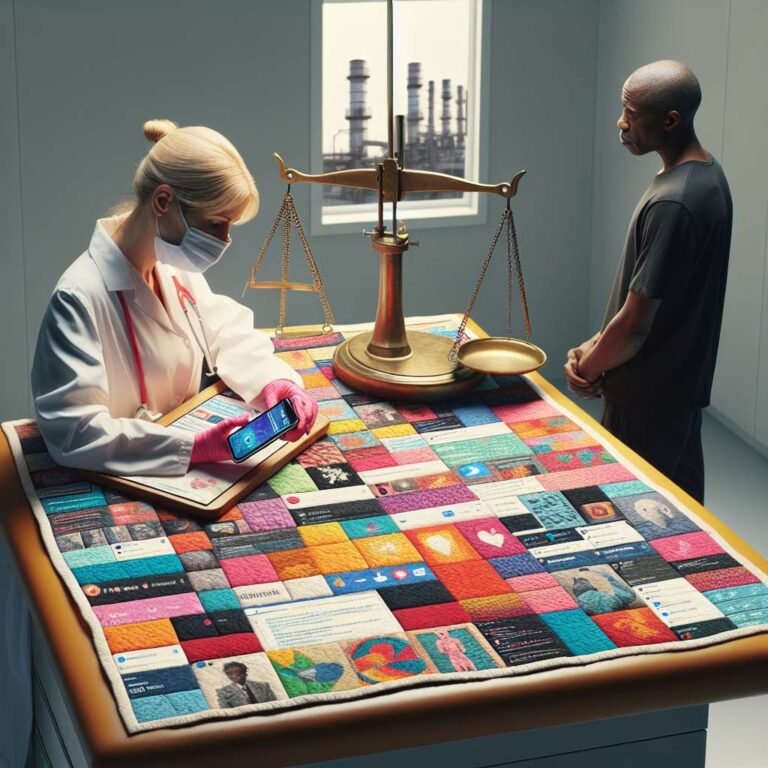
This edition of The Download, MIT Technology Review’s weekday newsletter, surveys how the internet is altering medicine and public understanding of health. Reporters spoke with multiple health-care professionals about the modern impulse to “do your own research,” describing how social media and online forums can both provide community and spread dangerous misinformation. The reporting is part of the series “The New Conspiracy Age,” and it examines how conspiracy theories can reach into exam rooms, influence patient decisions, and change clinical practice. The piece was reported by Rhiannon Williams.
Also featured is a climate-focused column arguing that individuals should not be unduly worried about their personal Artificial Intelligence footprint. Casey Crownhart, a climate technology reporter writing for The Spark, frames the debate around responsibility for emissions and energy use, recommending that people not be burdened into avoiding everyday uses of chatbots for low-stakes tasks like travel planning or creative prompts. The column stresses systemic accountability over individual guilt while acknowledging broader concerns about the environmental cost of large-scale Artificial Intelligence systems.
The newsletter also rounds up short items across technology beats. Quantinuum unveiled Helios, a third-generation ion-based quantum computer that promises expanded power and easier paths to scaling compared with superconducting-qubit machines, though it is not yet capable of industry-scale algorithms, according to Sophia Chen. The must-reads list covers a range of developments: a new California privacy law giving users opt-out rights, an FDA fast-tracked pancreatic cancer pill, claims by Artificial Intelligence pioneers about outperforming humans in some tasks, planned job cuts at IBM as it pivots to software and Artificial Intelligence consulting, questions about data-center job creation and energy use, experiments showing how AI shopping agents can be manipulated, efforts to make computer vision fairer, cultural shifts in social media, and reporting on ethically sourced “spare” human bodies as a contentious biomedical possibility. The edition mixes deep reporting with short briefs and opinion, signaling how interconnected technology, health, climate, and ethics have become.