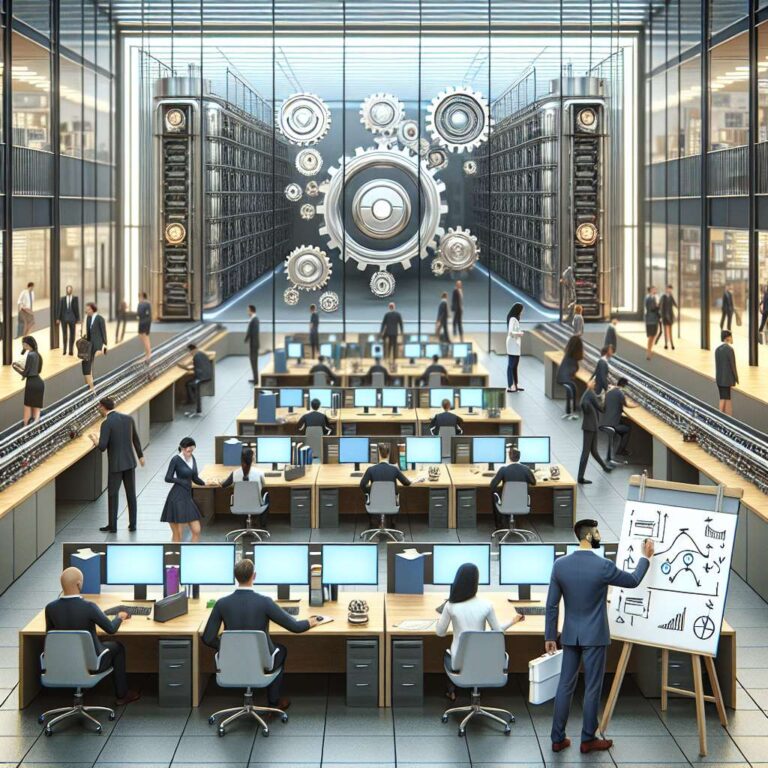
Artificial intelligence is rapidly transforming the labor market, raising urgent questions about whether it will primarily displace workers or create new opportunities. As the technology advances across areas such as robotics and autonomous vehicles, it is expected to absorb more labor hours and change how work is organized. If artificial intelligence meaningfully reduces the time required to perform many tasks, employers will need fewer hours or fewer workers to maintain the same output, which could lead to job reshuffling within firms, role redesign, or higher unemployment, depending on how quickly displaced workers can be redeployed.
Analysts estimate that it is credible to imagine displacing 10%-20% of the workforce over the next decade, and without redeployment, that would cause the unemployment rate to rise by 1-2 percentage points per year, although they view that as unduly pessimistic and see a 1% total rise over the medium term as more plausible. Historical experience suggests a more nuanced path: between 1985 and 2002, the number of ATMs grew from 60,000 to 352,000 while the number of bank tellers rose from around 500,000 to 527,000, as lower branch costs allowed banks to open more locations and shift tellers into higher value customer service and product roles. In radiology, specialized artificial intelligence has been shown to save 15%-40% of time depending on the task, yet postings on the American College of Radiology’s Career Center job board climbed from roughly 500-600 in 2016 to over 1,400 by March 2024 and stand at 1,964 today, suggesting that productivity gains can coexist with rising demand for skilled labor.
Macroeconomic and policy dynamics are expected to heavily influence outcomes. Automatic stabilizers like unemployment insurance would soften shocks, and severe labor market stress could trigger more forceful fiscal responses, including debates over universal basic income if technology gains accrue mainly to capital. Central banks might feel pressure to keep interest rates low to support employment, even at the risk of inflating asset prices, while political backlash could slow artificial intelligence deployment or push for broader benefit sharing. At the same time, redeploying labor into new enterprises will require substantial funding: while observers discuss hundreds of billions per year in anticipated artificial intelligence capex, the analysis argues that trillions of dollars in incremental capital will be needed to support new businesses and output, much of it likely raised in private markets and potentially boosting demand for venture debt as startups reach positive cash flow sooner.
The prospect of artificial general intelligence is treated as a wild card that could fundamentally alter the relationship between labor and capital. Some prominent technology leaders anticipate artificial general intelligence, or similar capabilities, within five years, while others are more cautious, and any transition that makes computers more effective than humans at a wide array of tasks could force a rewrite of existing social contracts between citizens, companies, and governments. Despite these uncertainties, the overarching view is cautiously optimistic that society will adapt, that labor can be meaningfully redeployed, and that younger generations will navigate a more dynamic, productivity-enhanced economy. From an investment perspective, controlling the development, implementation, and distribution of artificial intelligence technologies is framed as critical to capturing their long-term value.