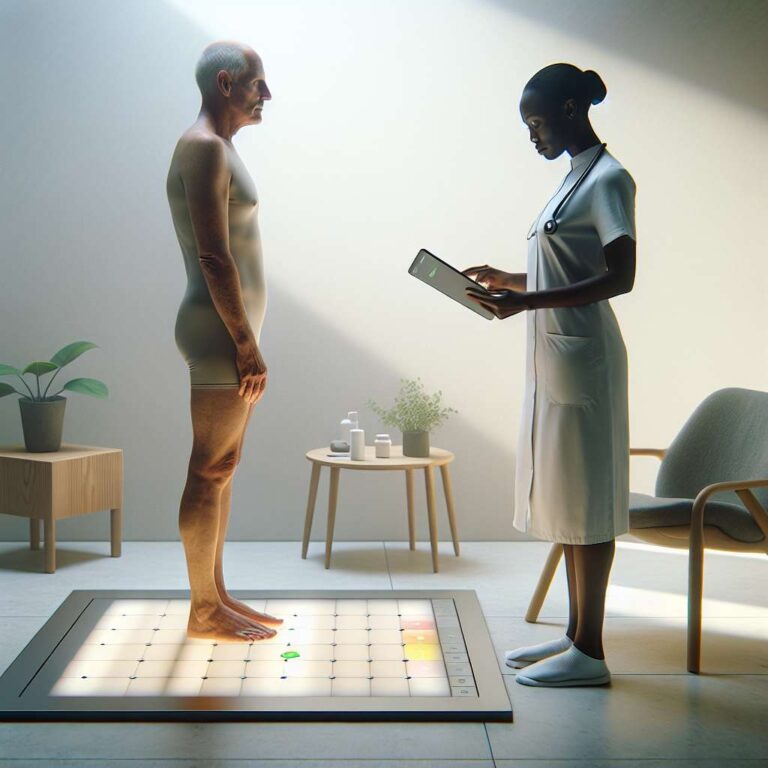
Researchers across the United States are using artificial intelligence tools supported by Johns Hopkins to tackle some of aging’s most persistent health challenges, from falls and dementia to independent living. At the University of North Texas, professor Rita Patterson is developing a system that measures how a patient’s body sways during routine checkups, with the goal of turning this subtle movement into a real-time indicator of physical and cognitive decline. The work aims to let physicians enter a patient’s measurements and receive an immediate green, yellow, or red score at the point of care, prompting closer review of recent falls, medication changes, or new risk factors before a crisis occurs.
The stakes are high for such technology. Falls are described as the leading cause of injury-related death for Americans age 65 and older, and one in four older Americans experience a fall each year, resulting in nine million injuries and three million emergency department visits. One 2024 study found that 10.6% of elderly adults who receive medical treatment after a fall are diagnosed with Alzheimer’s or another type of dementia within the next year. Patterson’s research has already shown a connection between cognitive decline and balance issues and is exploring whether cognitive problems may precede balance problems, which she argues could be a game changer for Alzheimer’s research and earlier intervention.
The Johns Hopkins Artificial Intelligence and Technology Collaboratory for Aging Research, known as JH AITC, is the central funding engine behind Patterson’s project and many others. The center and two peer collaboratories at the University of Pennsylvania and the University of Massachusetts, Amherst received $20 million in 2021 from the National Institute on Aging to fund the development of artificial intelligence technology for older adults, and the vast majority of this funding is being distributed to research teams nationwide. In four years, the JH AITC has funded research projects in 45 states, Washington, D.C., Puerto Rico, and the U.S. Virgin Islands, which as of December 2025 have collectively produced 42 published research papers, brought seven new products to market, and garnered a collective 54 awards and 11.7 million in follow-on funding.
Projects span a wide range of applications aimed at narrowing what Johns Hopkins geriatrician Peter Abadir calls a 13-year gap between the average person’s lifespan and healthspan, or the years lived independently and in good health. At Baylor University, researchers analyze disruptions or absence of WiFi signals to detect when at-home patients may be in crisis, while at Case Western Reserve University scientists test the feasibility of robotic assistants in private homes. At Johns Hopkins, Abadir and electrical and computer engineering associate professor Najim Dehak are collaborating with the Food and Drug Administration on floor sensors that can characterize gait patterns in older adults. Other Hopkins teams are building a chatbot that serves as a digital care navigator for patients with dementia, creating artificial intelligence models to optimize neighborhood caregiver networks so professionals can support more seniors at lower cost, and developing prediction tools to identify which Alzheimer’s patients most urgently need palliative care. Abadir argues that Hopkins’ deep focus on geriatrics positions it uniquely to lead this work and articulates a clear vision: to use science, engineering, and technology to transform aging from a period of decline into a stage centered on independence, resilience, and health.