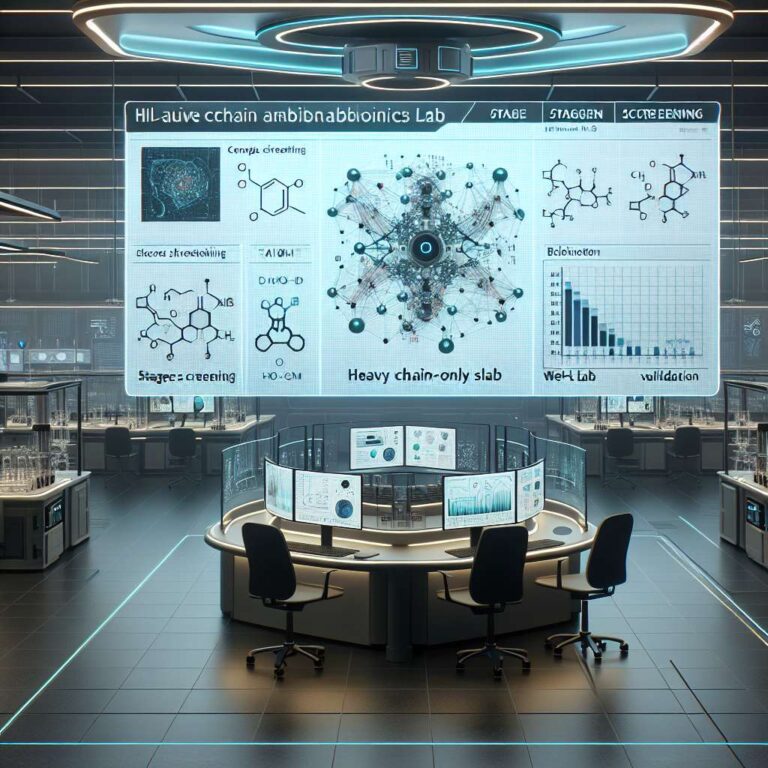
Harbour BioMed announced a fully human generative Artificial Intelligence HCAb model designed to accelerate next-generation biologics discovery. Built on the company’s Hu-mAtrIx Artificial Intelligence platform and underpinned by the Harbour Mice transgenic platform, the system creates a closed-loop workflow that integrates Artificial Intelligence design, intelligent screening, and wet-lab validation. Revealed at the company’s Global R&D Day 2025 event in Shanghai, the launch aims to shift antibody discovery from broad, blind screening to data-driven selection with higher speed and precision.
The model targets heavy chain only antibodies, which are valued for their simple structure and low molecular weight and are being explored for applications such as multi-specific antibodies, antibody-drug conjugates, CAR-T, and mRNA therapies. Addressing the stability challenges of conventional human VH domains without VL pairing, Harbour BioMed trained its generation model on 9 million NGS-derived HCAb sequences plus public datasets. Using a fine-tuned protein large language model, it produces de novo HCAb sequences and applies secondary optimization for target specificity. Candidates are then filtered through a multi-stage screening pipeline that includes an Artificial Intelligence classification model to remove non-HCAb sequences and a multimodal developability predictor with state-of-the-art performance assessing stability, solubility, and aggregation risk, before proceeding to synthesis and lab testing.
In early results, the platform delivered a tenfold increase in candidate generation and improved hit rates: of 107 de novo binders, 78.5 percent bound their intended targets. Twenty molecules advanced to wet-lab validation, showing high activity, purity, yield, and specificity, with average yields above 700 mg/L. Multiple candidates demonstrated nanomolar binding affinity and maintained activity against targets in both humans and cynomolgus monkeys. Harbour BioMed describes the platform as a self-evolving loop of Artificial Intelligence design, automated validation, and model re-learning to continuously improve performance and R&D efficiency.
The company also introduced the Global Artificial Intelligence + Pharmaceutical Ecosystem Alliance to bring together experts, technology partners, and investors to modernize drug discovery with Artificial Intelligence. The alliance has backing from government bodies, industry associations, and organizations including Fortera Capital, Insilico Medicine, Molecular Mind, Evinova, INNOVEL, Fenglin Group, Taimei Technology, EClinCloud, Deep Intelligent Pharma, and Harbour BioMed. Looking ahead, the HCAb model is expected to support development across multi-specific antibodies, XDCs, in vivo CAR-T, and inhaled or oral large-molecule drugs, positioning fully human HCAbs as a foundation for the next wave of biologics.