
Grok 4 introduces major upgrades in large language modeling

Elon Musk´s xAI has released Grok 4, an advanced iteration of its large language model, promising significant leaps in Artificial Intelligence capabilities.

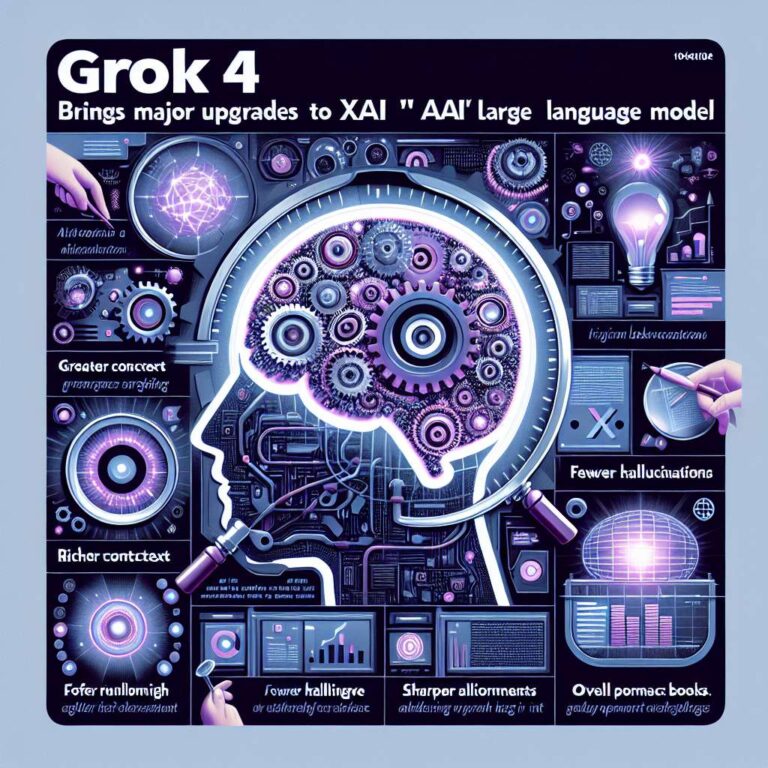
Grok 4 marks the latest advancement from xAI, Elon Musk´s Artificial Intelligence company. Designed as a significant upgrade over its predecessor, this new iteration is engineered to deliver substantial improvements in both performance and utility. Notably, Grok 4 is built on an enhanced large language model architecture, employing sophisticated training techniques to manage more complex conversational tasks.

The development of Grok 4 reflects a commitment from xAI to push the boundaries of what language models can achieve. With new features integrated into the platform, the update is expected to offer richer contextual understanding, greater accuracy in natural language processing, and heightened versatility across a variety of use cases. These enhancements position Grok 4 as a potentially formidable player in the continually evolving landscape of Artificial Intelligence-driven language models.

While comparisons are inevitable with other major models in the field, Grok 4’s launch spotlights the ongoing race among leading technology firms to create ever more sophisticated conversational agents. Musk’s involvement further raises the profile and expectations for xAI’s technology as it competes for relevance and adoption by businesses and end users demanding more powerful dialog and reasoning abilities from their Artificial Intelligence solutions.
58

Impact Score

European Union delays key Artificial Intelligence Act obligations

European Union lawmakers have agreed to revise the Artificial Intelligence Act, delaying major high-risk compliance obligations and easing some overlapping requirements. The changes give businesses more time to prepare while preserving the law’s core framework for high-risk systems and transparency rules.

HMRC signs £175m Quantexa deal for fraud detection

HM Revenue and Customs has signed a £175 million, 10-year agreement with Quantexa to unify fragmented data and strengthen fraud detection. The deployment is designed to automate routine work while keeping decisions transparent, auditable and subject to human approval.

Us supercomputers test new Artificial Intelligence chip suppliers

Sandia National Laboratories is evaluating chips from Israeli startup NextSilicon as major chipmakers shift their roadmaps toward Artificial Intelligence. The move reflects growing concern that mainstream processors are deprioritizing the scientific computing features government labs still need.

EU Artificial Intelligence Act amendments delay some deadlines and add new bans

A provisional Digital Omnibus on Artificial Intelligence would push back several EU Artificial Intelligence Act deadlines, refine how the law interacts with sector rules, and introduce new prohibited practices. The package also expands limited bias-testing allowances and strengthens centralized oversight for some high-impact systems.

Contact Us

Got questions? Use the form to contact us.

Contact Form

Clicking next sends a verification code to your email. After verifying, you can enter your message.