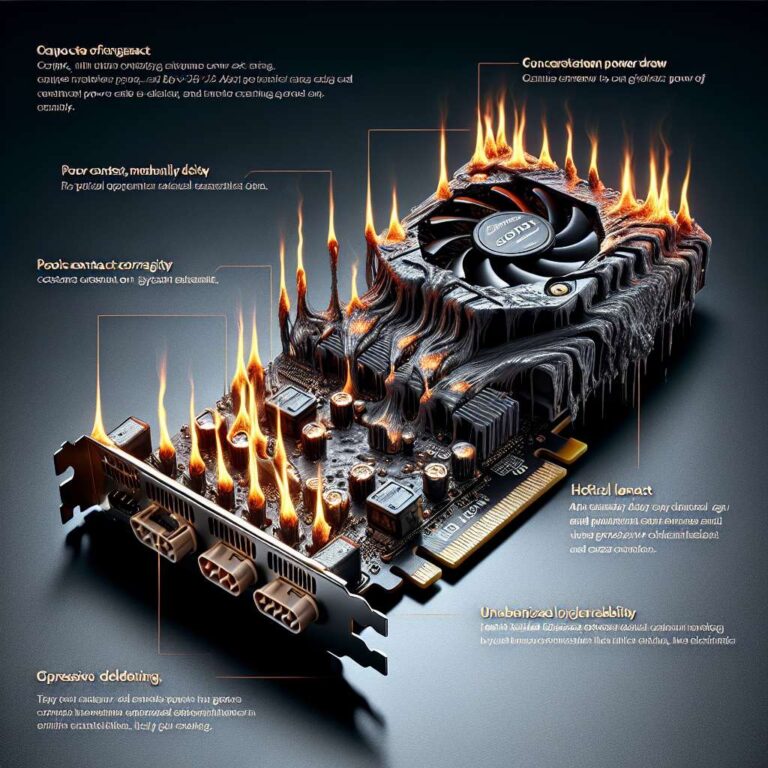
Reports of melting and burning 12V-2×6 power connectors on high-end NVIDIA and some AMD graphics cards continue to surface, challenging assumptions that only extreme power draw is responsible. A recent incident involving a Gigabyte Aorus Master Ice RTX 5090 highlights that even aggressive power limiting may not prevent connector damage. The case, shared by a user on the Mobile01 forum, describes the top row of pins in the graphics card’s 12V-2×6 connector melting despite a deliberate undervolt and reduced power target.
In this configuration, the user had limited GPU power to 500 W and dropped the voltage limit down to 0.9 v, which is described as a reduction of 100 W and 0.205 v compared to stock settings. The graphics card was powered via a 16-pin adaptor connected to the power supply, and the failure occurred on the GPU side of the connection rather than at the power supply side. The first signs of trouble were frequent crashes during gaming sessions, which preceded the discovery of visible damage. Both connector ends on the GPU side appear to have been affected, and the account suggests that higher power limits could have caused even more severe damage.
Independent testing cited in the report indicates that the 12V-2×6 cable design may suffer from unstable or inadequate physical contact, which increases current density and temperature on individual pins and can lead to localized overheating. Researchers note that these connection problems can exist even when cables are new and previously unused. Unofficial adaptors are also reported to aggravate the contact quality issues, further raising the risk of imbalanced load and thermal stress within the connector. Taken together, the findings point toward connector integrity and cable implementation as critical reliability factors, beyond simple wattage limits or voltage settings.