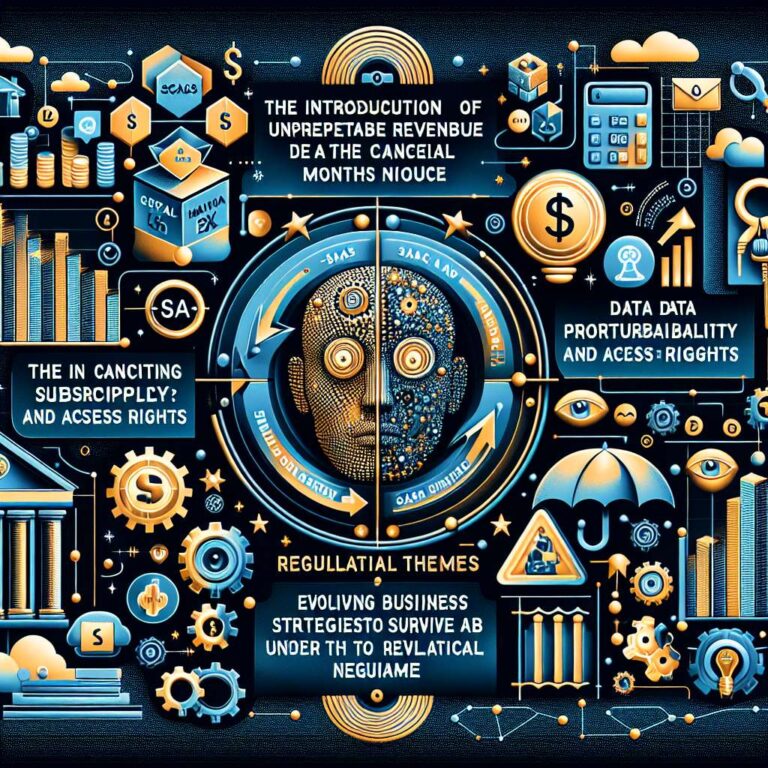
The EU Data Act, which took effect this year, changes how software-as-a-service companies and Artificial Intelligence platforms manage subscriptions and revenue. Under the law, customers may terminate subscriptions with two months’ notice regardless of original contract length. The article reports that this removes the certainty of long-term contracts and challenges the central role of annual recurring revenue, or ARR, in valuation and forecasting.
Industry observers cited in the article warn that more volatile revenue streams could alter investor expectations and make ARR a less reliable indicator of stability. For Artificial Intelligence firms that rely on continuous data flows to improve models, the Data Act’s emphasis on data portability and access rights raises competitive risks because customers can move data and switch providers more easily. The article references analysis from the Paid.ai blog and notes alignment with broader regulatory guidance from the European Commission and the European Parliament, including connections to the EU Artificial Intelligence Act.
To adapt, the piece recommends that SaaS and Artificial Intelligence companies shift toward customer-centric operations, investing in customer success, proactive renewals, and product improvements that demonstrate ongoing return on investment. The article also highlights potential new monetization paths: pay-per-use models, collaborative data ecosystems, and partnership-based revenue that rely less on locked-in subscriptions. Insights from EY Luxembourg are mentioned to show how robust data management and compliance can become competitive advantages.
The article acknowledges concerns that the rules could burden smaller firms with compliance costs but reports proponents view the change as promoting quality over lock-in tactics. It also notes global implications because companies outside the EU with EU customers must comply, affecting U.S.-based startups and valuation assumptions during funding rounds. Written by Maya Perez and published on Friday, September 19, 2025, the article frames the Data Act as a regulatory inflection point that will prompt strategic pivots across the SaaS and Artificial Intelligence sectors.