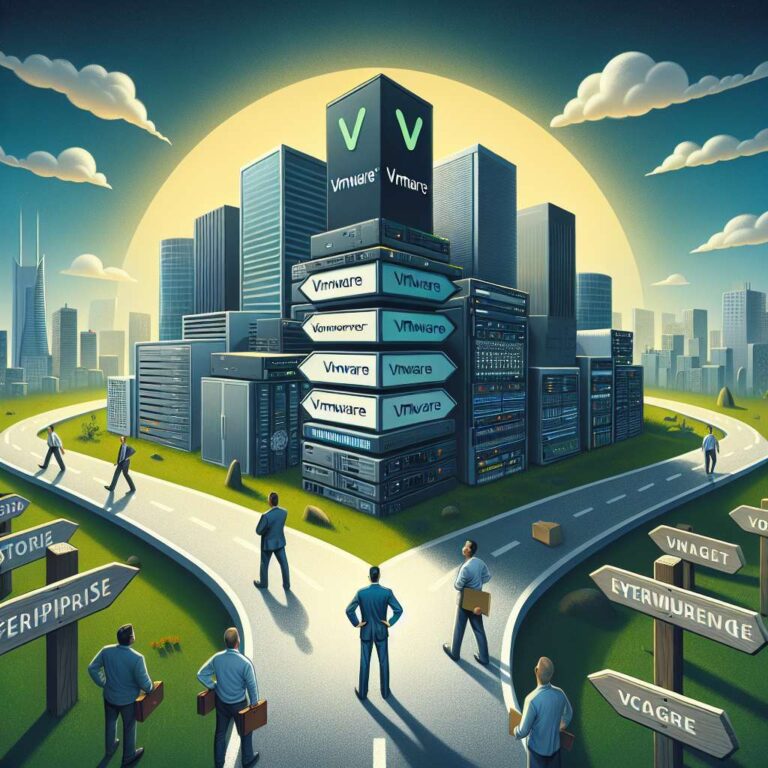
In late 2023, a long-standing virtualization cornerstone became a pressing uncertainty on the enterprise IT roadmap. Concerns over VMware licensing changes and higher support costs triggered what analysts described as an exodus mentality. Forrester predicted that one in five large VMware customers would begin moving away from the platform in 2024, while a Gartner community poll found that 74 percent of respondents were rethinking their VMware relationship in response to recent changes. With pricing hikes and product roadmap opacity in the mix, CIOs face a difficult choice: double down on a familiar but costlier stack, or treat the disruption as a catalyst to reassess how and where critical workloads should run.
That reassessment is increasingly framed as a modernization opportunity. Rather than a narrow license negotiation, the moment invites teams to evaluate which workloads benefit from staying put and which merit migration to platforms that better match performance, scalability, and operational preferences. The strategic question is not only what to leave behind, but how to align infrastructure decisions with forward-looking plans for resilience and efficiency, given the heightened scrutiny of costs and clarity of vendor direction.
“There is still a lot of uncertainty in the marketplace around VMware,” says Matt Crognale, senior director, migrations and modernization at cloud modernization firm Effectual. He notes that the VMware portfolio has been streamlined and refocused over the past couple of years, adding that it has been trimmed down to a core offering focused on the technology rather than disparate systems. For some organizations, that consolidation may simplify adoption decisions. For others, it reinforces the need to validate whether a tighter core aligns with their specific requirements as they weigh migration paths and modernization outcomes.
This report is custom content produced by MIT Technology Review Insights and not the publication’s editorial staff. The piece was developed by human writers, editors, analysts, and illustrators, with Artificial Intelligence tools limited to secondary production processes and subject to thorough human review.