Enterprise artificial intelligence is shifting from experimental tools to embedded infrastructure across marketing, as model providers and platforms deepen their push into the application layer. Anthropic launched Claude Opus 4.6 with a one-million token context window in beta, multi-agent teams, and expanded capabilities for documents, spreadsheets, financial analysis, and search, signaling a bid to own knowledge work workflows. Anthropic also expanded its Cowork product with customizable plug-ins that encode tools, data sources, and workflow commands, while OpenAI introduced Frontier to help enterprises deploy artificial intelligence agents and is building consulting capacity with deployment managers and solutions architects to close the adoption gap. A multi-year 200 million partnership between Snowflake and OpenAI will embed models directly into Snowflake’s data cloud, positioning artificial intelligence agents as native to governed enterprise data environments rather than bolt-on experiments.
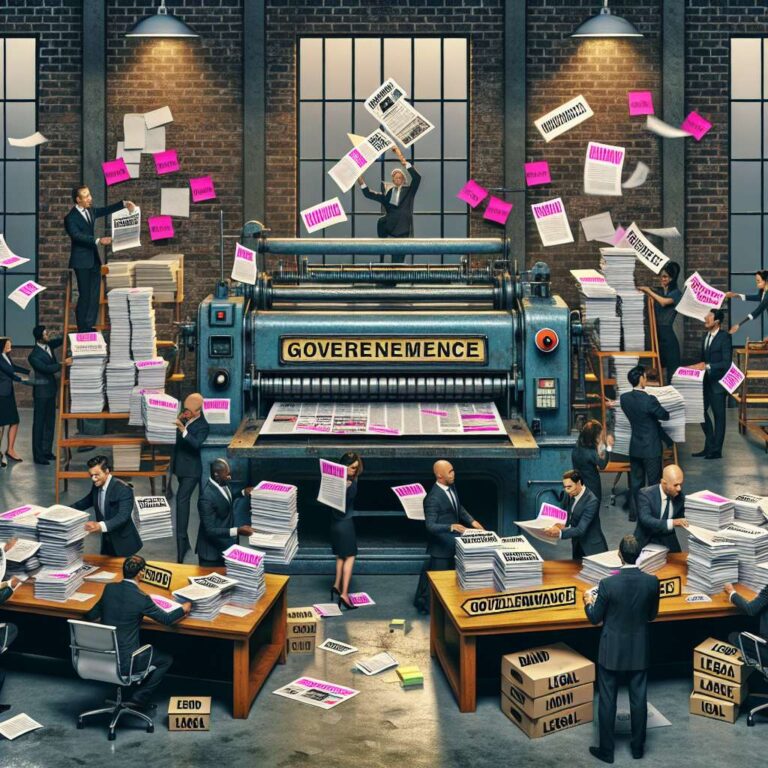
As artificial intelligence becomes operational, new data shows marketing entering an “operational era” with 91% of surveyed marketers now using artificial intelligence, yet only 41% able to prove ROI, with governance, legal review, and brand standards emerging as primary blockers. Analysts argue that artificial intelligence exposes structural weaknesses more than tooling gaps, with many organizations still anchored to historical dashboards, siloed teams, and slow reporting cycles while real-time signals proliferate. High-maturity companies embed governance into workflows, assign ownership, and dedicate at least 10% of budget to artificial intelligence, achieving higher satisfaction and measurable returns. At the same time, worker confidence in artificial intelligence has declined, with one survey reporting an 18% drop in confidence even as usage rises, as employees struggle with hallucinations, inconsistent outputs, and inadequate training, highlighting that leadership, enablement, and psychological safety are now as critical as model performance.
Platform strategies and monetization models are evolving quickly, sparking both opportunity and conflict. OpenAI is testing advertising in ChatGPT’s free tier, hiring leaders from Meta and promising high-priced, clearly separated placements, which drew a sharp response from Anthropic after it ran Super Bowl ads mocking ad-driven chatbots and positioning Claude as an ad-free alternative. Reddit is betting on artificial intelligence search and reported a 70% rise in fourth-quarter revenue, more than 75% growth in active advertisers, revenue growth of at least 50% year over year in eleven of its top 15 ad verticals, 19% growth in daily active users, and a 42% increase in global average revenue per user, attributing gains in part to artificial intelligence-powered ad tools and optimization. Meanwhile, software stocks sold off as investors worried that artificial intelligence agents encroaching on application-layer workflows could erode traditional software pricing power, even as new tools like Mistral’s on-device Voxtral Transcribe 2 models, viral agent layers such as OpenClaw, and experimental agent-only networks like Moltbook introduce fresh security, governance, and misuse concerns.
Trust, content integrity, and brand safety are under mounting pressure as artificial intelligence eats into discovery and media. Artificial intelligence chatbots are increasingly citing Grokipedia, an artificial intelligence-generated encyclopedia tied to Grok, raising alarms about circular sourcing, misinformation, and the lack of transparent human editorial oversight. Social platforms are being flooded with low-quality artificial intelligence-generated “slop,” including fake imagery and bizarre short-form videos, while moderation teams shrink and calls grow for authenticity infrastructure that can prove real content rather than merely detect fakes. At the same time, Reddit is building a content licensing business for model training, and advertising platforms are using artificial intelligence to dynamically optimize creative and bids, tightening the link between artificial intelligence enablement and revenue performance. Analysts also note that some companies attributing more than 50,000 layoffs in 2025 to artificial intelligence may be “AI-washing” broader restructuring, underscoring how artificial intelligence narratives influence investor perception, employer brand, and workforce anxiety.
Looking ahead, several perspectives forecast deeper transformation of product innovation, creative work, and consumer behavior by 2030. Emerging “creative intelligence” frameworks describe six core functions that treat creative as measurable infrastructure, connecting asset ingestion, pre-testing, analytics, activation, and measurement to performance metrics. Forward-looking scenarios envision artificial intelligence world models enabling continuous consumer simulations where products evolve with digital populations, consumers and their agents co-create offerings, and personal artificial intelligence agents mediate purchase decisions, collapsing traditional funnels. In parallel, Amazon is rolling out artificial intelligence tools at MGM Studio to accelerate film and television production while keeping humans central, hinting at broader adoption of artificial intelligence-assisted storytelling. Across these developments, a recurring theme holds that artificial intelligence will not decide the future alone; leadership choices around governance, structural redesign, training, and ethical boundaries will determine whether organizations achieve transformative gains or entrench new risks.