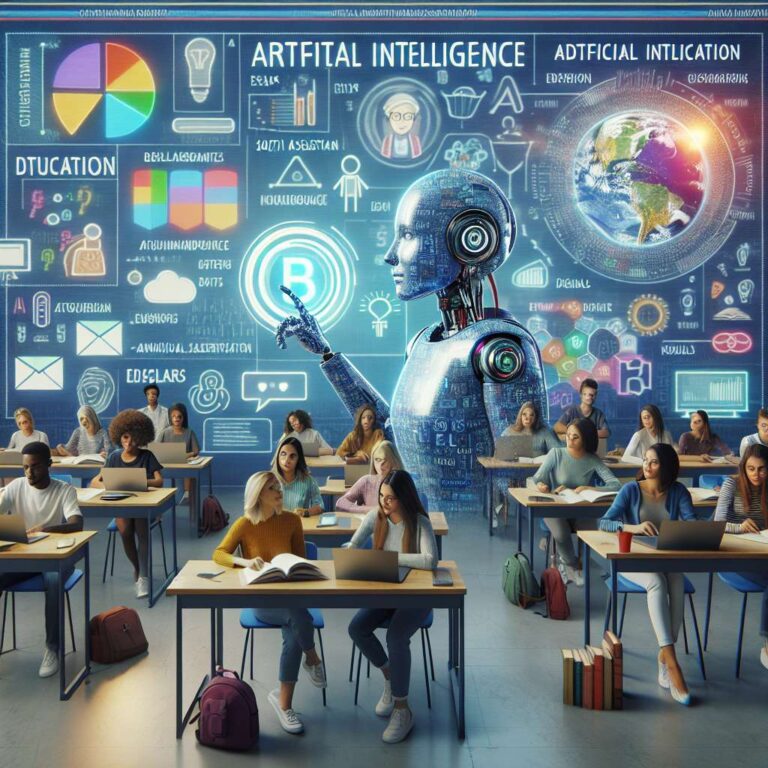
Educators across different settings are rapidly adapting to advances in artificial intelligence, focusing not only on how to use new tools but also on how to stay safe from misinformation and deceptive content. Traditional textbooks are seen as too slow for the pace of change, with teachers arguing that any printed material on artificial intelligence would be outdated almost as soon as it was produced. Instead, instructors are experimenting with live, adaptive tools and curricula that can evolve alongside the technology.
Middle school social studies teacher Dan Jones describes recognizing immediately that artificial intelligence would transform education. He brings a custom built artificial intelligence system into his 7th and 8th grade classroom, configuring a chat bot that is designed not to write on behalf of students but to act as a conversation partner. The tool is used less as a shortcut and more as a way to probe understanding, prompt deeper questions, and guide students as they work through material. The approach reflects a broader shift toward using artificial intelligence to augment critical thinking rather than replace student effort.
Artificial intelligence education is also expanding outside traditional K-12 classrooms. James Sturtevant, who began teaching artificial intelligence skills to adults just 6 months ago, notes that content he presented in September already feels prehistoric, underscoring how quickly tools are evolving. At the same time, educator and creator Jeremy Carrasco is building ShowtoolsAI as an online classroom to help the general public detect artificial intelligence and fake video, emphasizing that the ability to identify artificial intelligence is tied to knowing who to trust online. Carrasco warns that once distrust in real videos reaches a breaking point, social interactions on the internet could become very fraught, and argues that media literacy skills such as checking how old an account is and whether it is realistic that it is already highly polished after only 2 months of posts are important tells that anyone can use without being an expert in artificial intelligence video spotting. He sees these techniques as part of a core toolkit that should be taught as artificial intelligence becomes more embedded in daily digital life.