
Deep Learning Advances Single-Cell Sequencing

Explores how deep learning is enhancing single-cell sequencing to understand cellular heterogeneity.

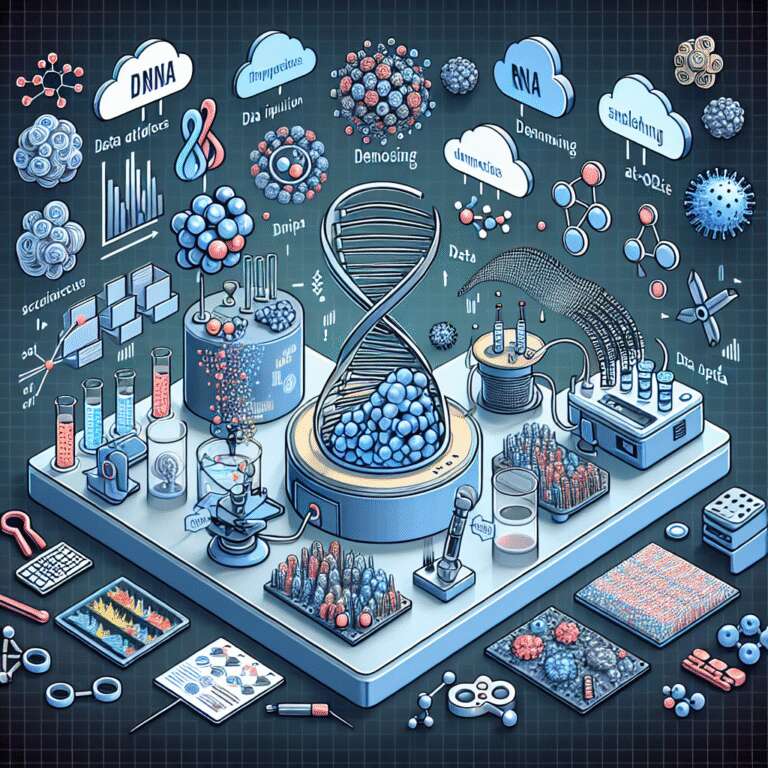
The article delves into how deep learning is revolutionizing single-cell sequencing technologies, which offer unprecedented insights into cellular diversity. Single-cell sequencing allows for DNA and RNA analysis at an individual cell level, crucial for understanding cellular heterogeneity. Introduced as the ‘Method of the Year’ by Nature in 2013, advancements have continued with the integration of deep learning techniques, proving indispensable for managing the complexity and volume of data produced during sequencing.

The authors detail various applications of deep learning in this field, such as imputation and denoising of scRNA-seq data, which addresses technical challenges like data sparsity and noise. They also highlight the significance of architectures like autoencoders for reducing dimensionality and identifying subpopulations of cells. Moreover, they underscore the importance of batch effect removal and multi-omics data integration, which are critical for reconciling data variations and drawing comprehensive biological insights from multimodal datasets.

Despite these advancements, the article notes several challenges in the application of deep learning to single-cell sequencing. It points out the need for robust benchmarking to validate models’ performance across diverse datasets. Additionally, the integration of multi-omics data presents complexities due to noise and the diversity of cell information. Nonetheless, overcoming these hurdles could unlock more profound understandings of cellular functions, with implications for improved healthcare and disease cure strategies.
77

Impact Score

Tesla plans terafab for Artificial Intelligence chips

Tesla is moving toward a large-scale chip manufacturing project to support its autonomous driving roadmap. Elon Musk said the terafab effort for Artificial Intelligence chips will launch in seven days and may involve Intel, TSMC and Samsung.

Timeline traces evolution, civilisation and planetary stewardship

A sweeping chronology links cosmology, evolution, human history and modern environmental risk in a single long view of the human condition. The sequence culminates in contemporary debates over climate change, biodiversity loss and artificial intelligence governance.

Wolters Kluwer report tracks Artificial Intelligence shift in legal work

Wolters Kluwer’s 2026 Future Ready Lawyer findings show Artificial Intelligence has become a foundational tool across law firms and corporate legal departments. The survey points to measurable time savings, revenue growth, and rising pressure to strengthen training, ethics, and security.

Anthropic March 2026 release roundup

Anthropic rolled out a broad set of March 2026 updates across Claude Code, the Claude Developer Platform, Claude apps, and enterprise partnerships. Changes focused on larger context windows, workflow improvements, reliability fixes, visual output features, and new partner enablement programs.

China renews push to lead in technology and Artificial Intelligence

China’s 15th five-year plan elevates science and technology as core national priorities, with a strong emphasis on self-reliance and Artificial Intelligence. The blueprint signals heavier investment, broader industrial support, and a more confident bid to shape global technology standards.

Contact Us

Got questions? Use the form to contact us.

Contact Form

Clicking next sends a verification code to your email. After verifying, you can enter your message.