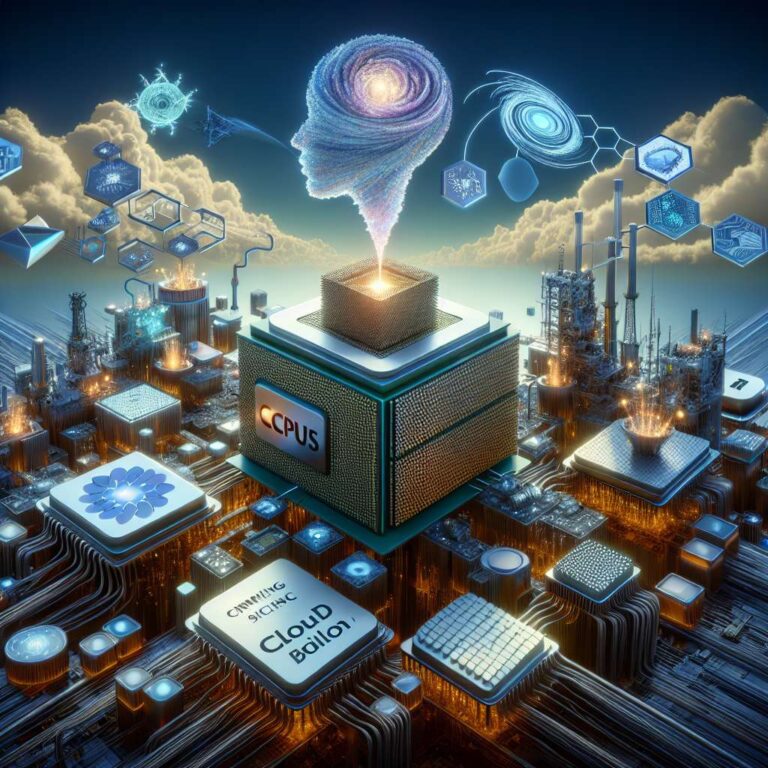
CPUs continue to anchor high-performance computing even as GPUs dominate the conversation around the Artificial Intelligence revolution. According to the article, CPUs handle 80 to 90 percent of HPC workloads globally, powering tasks from climate modeling to semiconductor design. Far from being eclipsed, they are becoming more competitive and indispensable as organizations seek balanced performance, flexibility, and value for complex scientific and industrial workloads.
The competitive landscape has broadened beyond Intel’s x86 lineage to include ARM and emerging designs such as RISC-V. High-profile systems like Japan’s Fugaku supercomputer showcase how CPU innovation can push performance to new frontiers. At the same time, major cloud providers including Microsoft and AWS are developing their own silicon, further diversifying the ecosystem and giving users more options tailored to scale, performance, and integration requirements.
Enduring strengths drive CPU relevance. Flexibility, compatibility, and cost efficiency make CPUs the default choice for many workloads. Evan Burness of Microsoft Azure calls CPUs the “it-just-works” technology, noting that moving complex, proprietary code to GPUs can be expensive and time consuming. CPUs, by contrast, typically preserve software continuity across generations with minimal friction. That reliability matters to businesses and researchers who prioritize proven results and predictable operations over theoretical peak performance.
Meanwhile, innovation is redefining what a CPU can deliver. Advances in chiplet design, on-package memory, and hybrid CPU-GPU architectures are extending performance beyond the limits of Moore’s Law. For many organizations, the CPU remains the strategic node that balances speed, efficiency, and cost while complementing accelerators. Looking ahead, the interplay among CPUs, GPUs, and specialized processors such as NPUs will shape HPC, with fit-for-purpose design taking precedence over a zero-sum mindset. As Addison Snell of Intersect360 Research observes, science and industry never run out of harder problems, and CPUs will remain at the center of the computing ecosystem as those challenges grow.