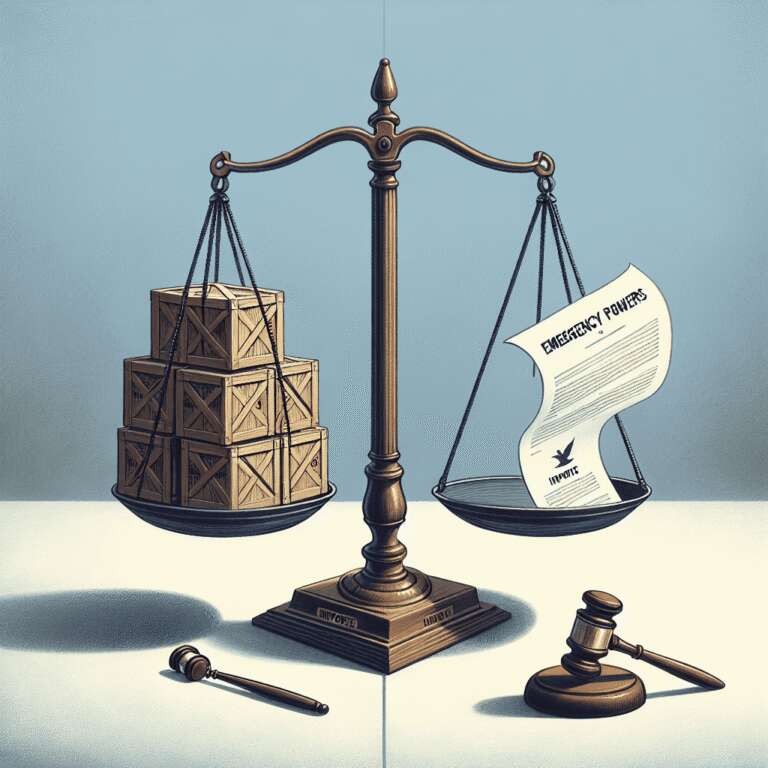
US President Donald Trump´s broad tariffs on imports will continue temporarily after the Court of International Trade ruled against the legality of emergency powers used to impose them, but permitted their collection while the White House appeals. The court determined that the International Emergency Economic Powers Act (IEEPA) did not give the president authority to levy sweeping tariffs, stating that such power rests with Congress. The ruling came as a result of lawsuits from small businesses and a coalition of US states, challenging the White House’s use of emergency measures to disrupt established trade relationships and penalize imports from most US trading partners.
The legal challenge centered on tariffs Trump implemented under his so-called ´Liberation Day´ regime, which placed a 10% baseline tariff on most foreign imports and higher rates on select countries and products, targeting blocs like the EU, UK, Canada, Mexico, and China. While the court blocked tariffs imposed via emergency powers on most countries, it did not address duties levied on specific goods such as cars, steel, and aluminium, which were justified under separate laws related to national security or unfair trade. The decision has drawn praise from legal opponents and state attorneys general, who emphasize that tax authority remains with Congress. Trump, however, condemned the ruling and defended his right to protect US economic interests.
The next hearing is scheduled for 5 June, and the case could reach the US Supreme Court. Even if the administration ultimately loses, the president may still be able to impose tariffs through other mechanisms, such as short-term emergency duties or longstanding trade and national security statutes, albeit with more procedural requirements. Businesses and governments impacted by the tariffs will continue to pay them until the appeals process concludes, though refunds might be issued if the White House loses. The evolving legal situation has already unsettled global markets and complicated trade negotiations, including a fresh UK-US tariff agreement now thrown into uncertainty. For now, the outcome will shape the direction of US trade policy, negotiations with other nations, and the regulatory landscape for American and foreign businesses.