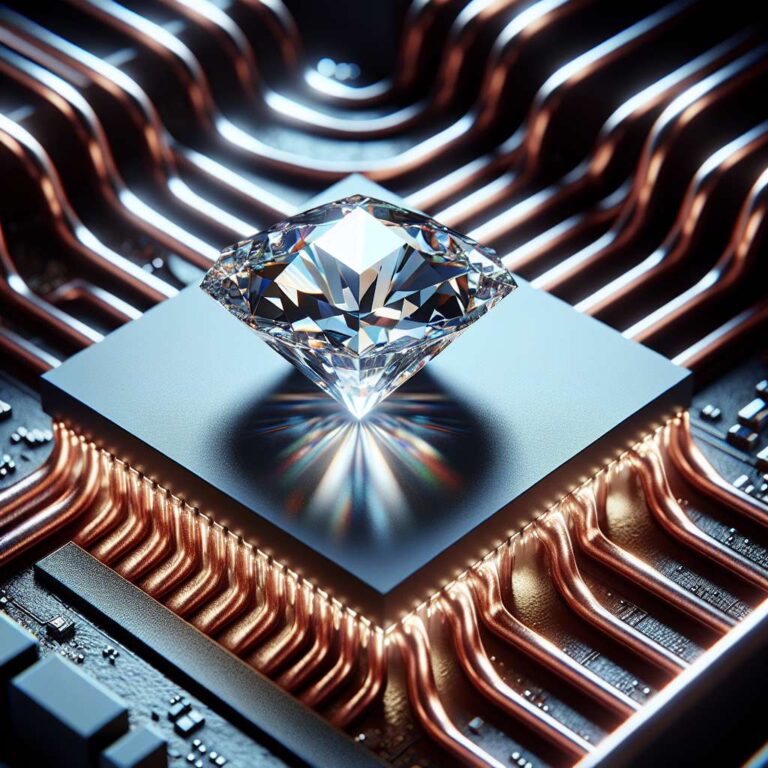
Coherent Corp. has announced the launch of its patented diamond-loaded silicon carbide ceramic composite, which targets the intensive thermal demands of next-generation Artificial Intelligence datacenters and high-performance computing (HPC) environments. The material sets a new standard in thermal conductivity, achieving an isotropic rate above 800 W/m-K—outpacing copper, the current industry staple, with twice the thermal transfer performance. Its coefficient of thermal expansion closely mimics that of silicon, simplifying direct integration with semiconductor devices and reducing stress from thermal cycling.
According to Coherent, the composite´s core advantage stems from the unparalleled heat management characteristics of diamond, which can dissipate extreme loads more effectively than traditional materials. Steve Rummel, senior vice president of engineered materials at Coherent, emphasized the product´s impact on reliability, component lifespan, and operational costs: with datacenter cooling accounting for up to half of total energy consumption, improved thermal efficiency translates to both ecological and economic gains. The diamond-silicon carbide technology not only offers robust thermal performance but also introduces benefits in mechanical strength, corrosion resistance, electrical insulation, and enduring function across wide temperature ranges.
Engineered for versatility, the composite seamlessly integrates with direct liquid cooling systems and is adaptable to modern server infrastructures and embedded cooling solutions. Its primary applications include direct-to-chip heat spreaders, microchannel cold plates for single- and two-phase cooling, and advanced semiconductor substrates where copper falls short under demanding conditions. By addressing the increasing energy and performance requirements of Artificial Intelligence and HPC infrastructure, Coherent´s innovation presents a significant advancement in the quest for more sustainable, reliable, and high-performing data-driven technologies.