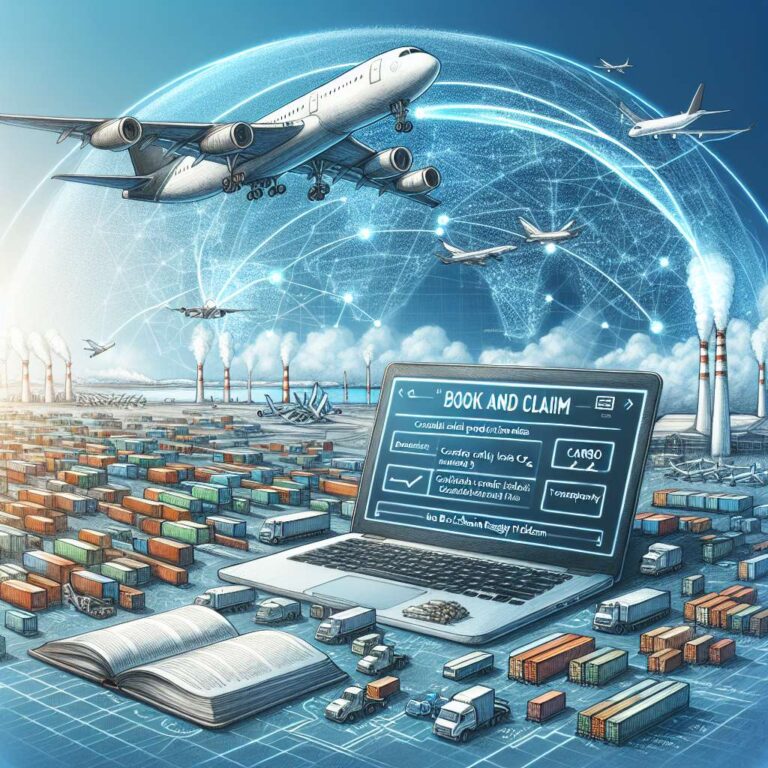
Emissions from air freight have increased by 25% since 2019, according to a 2024 analysis by environmental advocacy organization Stand.Earth, with the expansion of cargo-only fleets during the pandemic driving a yearly increase of almost 20 million tons of carbon dioxide and making up 93.8m tonnes from air freight overall. While fleet modernization and operational efficiencies are contributing to decarbonization, sustainable aviation fuel is emerging as a central tool for cutting the sector’s climate impact over the long term. When used neat, or pure and unblended, sustainable aviation fuel can help reduce the life cycle of greenhouse gas emissions from aviation by as much as 80% relative to conventional fuel, and the International Air Transport Association estimates that sustainable aviation fuel could account for as much as 65% of total reduction of emissions.
Experts such as Smart Freight Centre CEO Christoph Wolff and Shell Aviation president Raman Ojha describe sustainable aviation fuel as the main pathway for decarbonizing freight and wider aviation, highlighting that it is chemically identical to Jet A fuel and can be blended and scaled over time, with the hope that prices eventually fall. However, at at least twice the price of conventional jet fuel, cost remains a significant barrier, and supply is geographically concentrated, with verified sustainable aviation fuel outlets increasing from fewer than 20 locations in 2021 to 114 as of April 2025, which still represents only 92 airports out of more than 40,000 worldwide. To bridge the gap between limited supply points and global demand without physically shipping fuel around the world, stakeholders are turning to book and claim, a chain of custody model defined in ISO 22095:2020 that decouples administrative records from the physical flow of fuel.
Book and claim allows airlines, freight operators, and corporate customers to access the life cycle greenhouse gas emissions reduction benefits of sustainable aviation fuel relative to conventional jet fuel even when it is not available at their location, which DHL Express executive Bettina Paschke argues is essential for achieving short-term science-based targets. DHL uses book and claim to support its three sustainability pillars and to share credible emissions claims along the value chain, while Shell’s Avelia platform, launched in 2022 and expanded in 2024 to cover air freight, uses blockchain-backed tracking to link injected fuel with environmental attributes that can be retired by corporates, freight forwarders, or airlines. Although book and claim is not yet recognized by the Greenhouse Gas Protocol or the Science Based Targets Initiative, a community of early adopters, including the Smart Freight Centre, has worked in early 2024 to develop 11 key principles and best practices to standardize approaches, improve transparency, and build trust so that market-based inventories can complement physical inventories in the future. Industry leaders urge companies not to wait for perfect regulation, but to act now by joining registries and platforms, collaborating across the ecosystem, and treating book and claim as a strategic tool for managing decarbonization commitments and accelerating a sector-wide shift toward lower emissions.