
Biosensor Detects Bird Flu in Five Minutes, Offers Hope for Future Outbreaks

A breakthrough biosensor can detect bird flu in five minutes, potentially mitigating future outbreaks.

Over the winter, a bird flu outbreak led to severe egg shortages and price hikes, challenging grocery stores, restaurants, and consumers nationwide. In response, researchers at Washington University in St. Louis have developed a novel biosensor capable of detecting bird flu in air samples within five minutes. This innovation could significantly mitigate future outbreaks by allowing for rapid response and containment.

Bird flu, an airborne virus capable of spreading between animals and occasionally to humans, requires swift detection to manage outbreaks effectively. The conventional process of swabbing and DNA sequencing takes up to 48 hours, slackening timely interventions. The new device, however, continuously samples air and uses aptamers—genetic material strands that bind specifically to the virus—to trigger a detectable electrical change. This rapid detection mechanism could be a game-changer for farmers trying to control outbreaks, as demonstrated in research published in ACS Sensors.

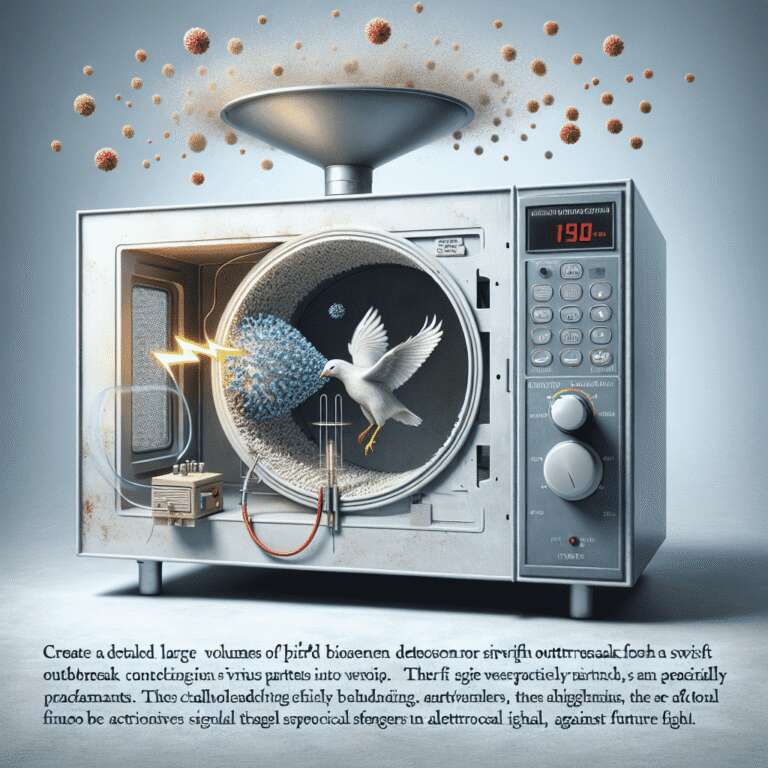
The team engineered a microwave-sized box to intake large air volumes and create a cyclone motion that concentrates virus particles onto liquid-coated walls. These particles are then captured as a liquid drip for biosensing. Despite its promise, some experts highlight the need for further testing in real-world farm conditions, which may involve dirt and other particles that could hinder performance. Nonetheless, advancements continue as researchers are collaborating with biotech firms to commercialize the biosensor and potentially detect multiple pathogens simultaneously.
72

Impact Score

Report finds California creative job losses are not driven by Artificial Intelligence

New research from Otis College of Art and Design finds California’s recent creative industry job losses stem from cost pressures and structural shifts, not direct worker displacement by generative Artificial Intelligence. The technology is changing workflows and expectations, but it is largely replacing tasks rather than entire jobs.

U.S. senators propose broader chip tool export ban for Chinese firms

A bipartisan proposal in the U.S. Senate would shift semiconductor equipment controls from specific fabs to targeted Chinese companies and their affiliates. The measure is aimed at cutting off access to advanced lithography and other wafer fabrication tools for firms such as Huawei, SMIC, YMTC, CXMT, and Hua Hong.

Trump executive order targets state Artificial Intelligence laws

Executive Order 14365 lays out a federal strategy to discourage, challenge, and potentially preempt state Artificial Intelligence laws viewed as burdensome. Employers are advised to keep complying with current state and local rules while preparing for regulatory uncertainty in 2026.

Who decides how America uses Artificial Intelligence in war

Stanford experts are divided over how the United States should govern Artificial Intelligence in defense, surveillance, and warfare. Their views converge on one point: decisions with such high stakes cannot be left to companies alone.

GPUBreach bypasses IOMMU on GDDR6-based NVIDIA GPUs

Researchers from the University of Toronto describe GPUBreach, a rowhammer attack against GDDR6-based NVIDIA GPUs that can bypass IOMMU protections. The technique enables CPU-side privilege escalation by abusing trusted GPU driver behavior on the host system.

Contact Us

Got questions? Use the form to contact us.

Contact Form

Clicking next sends a verification code to your email. After verifying, you can enter your message.