
ASUS unveils Turbo Radeon AI PRO R9700 for edge artificial intelligence and visualization

ASUS launches the Turbo Radeon AI PRO R9700 graphics card, tailored for professional visualization and edge artificial intelligence workloads with advanced RDNA 4 architecture.

ASUS has announced the launch of the Turbo Radeon AI PRO R9700 graphics card, designed to meet the demands of professional visualization and edge artificial intelligence acceleration. Building on the PRO R9700, an enhanced iteration of the Radeon RX 9070 XT gaming GPU, this new card boasts 32 GB of dedicated memory, reinforcing its suitability for intensive compute tasks and artificial intelligence workloads supported by the RDNA 4 architecture.

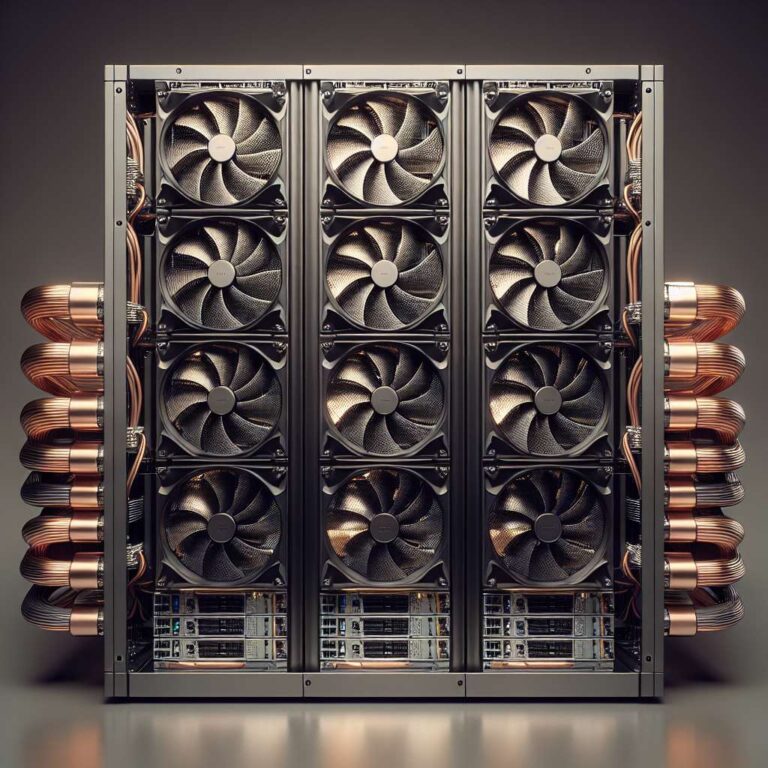
The Turbo Radeon AI PRO R9700 distinguishes itself with a specialized lateral blower cooling solution, incorporating a copper baseplate, phase-change thermal pad, and an aluminum channel-type heatsink. Coupled with lateral airflow from the blower, this ensures efficient heat dissipation and a slim two-slot form factor. Strategic design choices—such as recessed backplate and fan intakes—allow users to install up to four cards side by side in workstations or servers, optimizing multi-GPU setups while minimizing airflow obstruction for stable operation.

Performance specifications are compelling: a boost clock of 2920 MHz, an average clock of 2350 MHz, and memory speeds of 20 Gbps ensure robust computational performance. The card´s dimensions are 26.67 cm in length, 11.1 cm in height, and strictly two slots thick, supporting high-density deployment. Notably, power is supplied through a 12V-2×6 connector positioned at the tail end for easier cable management in tight spaces. Compute capabilities are significant, offering 47.8 TFLOP/s FP32, 95.7 TFLOP/s FP16, 1531 AI TOPS INT4, and 766 AI TOPS INT8, underlining its potential across a spectrum of professional and artificial intelligence-driven applications.
52

Impact Score

Computing industry analyses & trends in the Artificial Intelligence era

Nvidia leads Artificial Intelligence today, but open-source challengers, custom chips and strategic vendor deals from AMD and others are reshaping enterprise approaches. At the same time, data center power limits and weak data infrastructure are constraining returns on Artificial Intelligence investments.

Roundtables: surviving the new age of conspiracies

MIT Technology Review presents a recorded roundtable tied to its series The New Conspiracy Age, exploring how the current surge in conspiracy thinking is changing science and technology. Editors and a conspiracy theory expert discuss how to make sense of the phenomenon.

Rethinking business school value in the skills economy

At the QS Higher Ed Summit: Asia Pacific 2025, employers and educators argued that graduates now need a “mix and match” profile that pairs foundational business knowledge with artificial intelligence, data and technology awareness. Business schools are experimenting with curriculum redesign, credit-bearing internships and closer employer partnerships to close persistent readiness gaps.

AMD FSR Redstone arrives December 10

AMD has teased Redstone, a new FSR platform with details due December 10. It builds on FSR 4’s Artificial Intelligence and machine learning super resolution and introduces neural radiance caching, Artificial Intelligence and machine learning-based ray regeneration, and frame generation.

Contact Us

Got questions? Use the form to contact us.

Contact Form

Clicking next sends a verification code to your email. After verifying, you can enter your message.