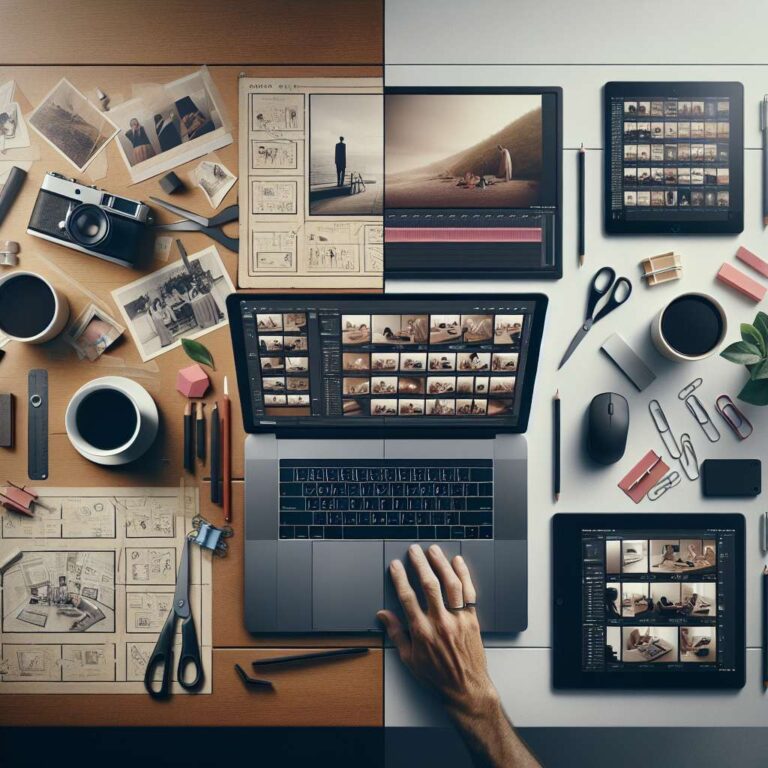
Visual media has become central to digital communication, marketing, and audience engagement, and new tools are making professional visuals more accessible to nonexperts. Artificial Intelligence video generators and online image editors allow creators, marketers, bloggers, and business owners to produce polished videos and images quickly, without traditional design or editing expertise. By automating complex steps and simplifying interfaces, these tools help users save time while improving the quality and consistency of their content across social platforms and campaigns.
An Artificial Intelligence video generator uses artificial intelligence to create videos automatically based on simple inputs such as text, images, or scripts. A user can enter a short script or idea, and the Artificial Intelligence video generator will convert it into a video by adding visuals, animations, voiceovers, and transitions. These tools are used for social media videos, marketing advertisements, educational content, product demonstrations, and YouTube videos, with one of the biggest advantages being that a video that might take hours or even days to produce manually can often be generated within minutes. They are described as time efficient, cost effective compared with hiring production teams, easy to use through templates and guided workflows, and scalable enough to support large volumes of content for campaigns and multi-platform strategies.
An online image editor is presented as a browser-based alternative to traditional installed software, enabling users to perform tasks such as cropping and resizing images, adjusting brightness and contrast, adding text and graphics, removing backgrounds, and applying filters and effects from any device with internet access. These editors emphasize convenience, simplicity, and collaboration, allowing teams to work on marketing assets or website visuals without exchanging large files. Many now include artificial intelligence powered features such as automatic background removal, object detection, and smart filters to produce professional results with minimal manual effort. In modern workflows, creators may first design graphics or thumbnails in an online image editor and then feed those assets into an Artificial Intelligence video generator to create cohesive videos for platforms like YouTube, Instagram, and TikTok. This combined use supports brand consistency and enables businesses, marketers, and individual creators to produce compelling digital content more efficiently, as artificial intelligence continues to advance voiceovers, animations, script generation, and intelligent design assistance.