
Artificial Intelligence Trends and Tools to Watch in 2025

Discover how Artificial Intelligence is shaping finance, logistics, careers, and daily life in 2025, with innovative tools redefining multiple sectors.

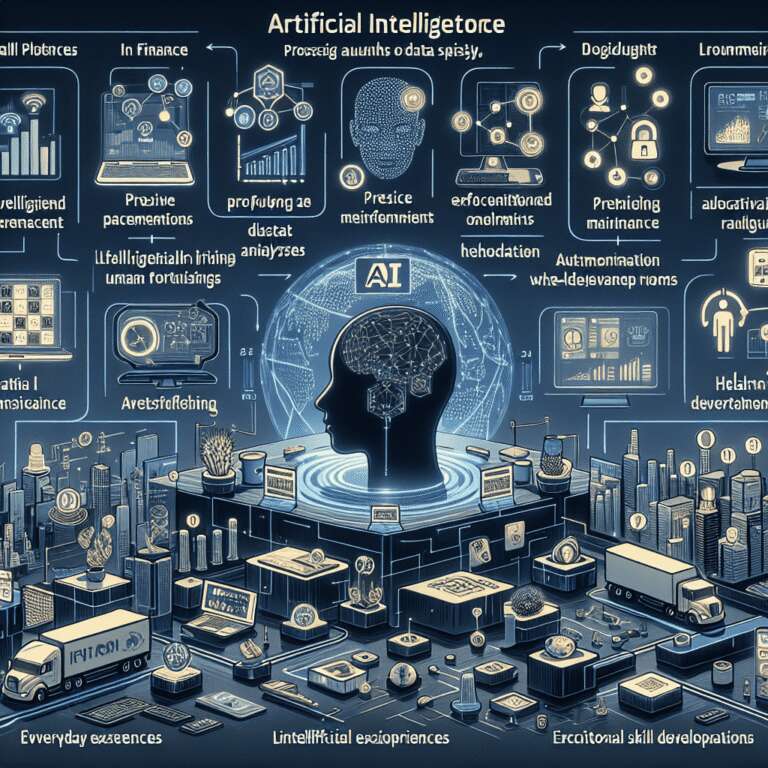
As businesses and individuals look ahead to 2025, Artificial Intelligence stands at the forefront of innovation, driving significant transformation across a variety of sectors. In finance, advanced tools like Kensho, developed by S&P Global, are leading a new era of predictive analytics. These systems analyze vast datasets and evaluate market risks with unprecedented speed and accuracy, outpacing traditional human analysis and facilitating faster, more informed investment decisions. This marks a pivotal shift, with companies increasingly relying on Artificial Intelligence to identify emerging trends, mitigate financial risks, and stay competitive.

The impact of Artificial Intelligence extends deeply into logistics, where companies are leveraging intelligent platforms to optimize supply chains, streamline operations, and enhance delivery precision. Through real-time data analysis, predictive maintenance, and automated routing, logistics providers are cutting costs while improving efficiency. These advancements not only ensure faster delivery but also contribute to sustainability goals with resource optimization and reduced waste. The integration of Artificial Intelligence in logistics is setting a new industry standard for operational excellence and customer satisfaction.

Beyond the corporate sphere, Artificial Intelligence is revolutionizing career trajectories and everyday experiences. Businesses are deploying intelligent tools in hiring, skill development, and performance evaluation, reshaping workforce expectations and creating new opportunities for reskilling. In daily life, consumer tools powered by Artificial Intelligence are becoming ubiquitous, offering personalized recommendations, automating routine tasks, and enhancing productivity. From virtual assistants to predictive health apps, the pervasive influence of Artificial Intelligence promises improved quality of life and productivity for people in all walks of life. As 2025 approaches, monitoring the evolution of these tools and trends will be crucial for organizations and individuals seeking to thrive in an increasingly intelligent world.
68

Impact Score

Nvidia acquisition of SchedMD raises Slurm neutrality concerns

Nvidia’s purchase of SchedMD has given it control of Slurm, an open-source scheduler that sits at the center of many supercomputing and large-model training systems. Researchers and engineers are watching for signs that support could tilt toward Nvidia hardware over AMD and Intel alternatives.

Mustafa Suleyman says Artificial Intelligence compute growth is still accelerating

Mustafa Suleyman argues that Artificial Intelligence development is being propelled by simultaneous advances in chips, memory, networking, and software efficiency rather than nearing a hard limit. He contends that rising compute capacity and falling deployment costs will push systems beyond chatbots toward more capable agents.

China and the US are leading different Artificial Intelligence races

The US leads in large language models and advanced chips, while China has built a major advantage in robotics and humanoid manufacturing. That balance is shifting as Chinese developers narrow the gap in model performance and both countries push to combine software and machines.

Congress weighs Artificial Intelligence transparency rules

Bipartisan lawmakers are pushing a federal transparency standard for the largest Artificial Intelligence models as Congress works on a broader national framework. The proposal aims to increase public trust while avoiding stricter state-by-state requirements and heavier regulation.

Report finds California creative job losses are not driven by Artificial Intelligence

New research from Otis College of Art and Design finds California’s recent creative industry job losses stem from cost pressures and structural shifts, not direct worker displacement by generative Artificial Intelligence. The technology is changing workflows and expectations, but it is largely replacing tasks rather than entire jobs.

Contact Us

Got questions? Use the form to contact us.

Contact Form

Clicking next sends a verification code to your email. After verifying, you can enter your message.