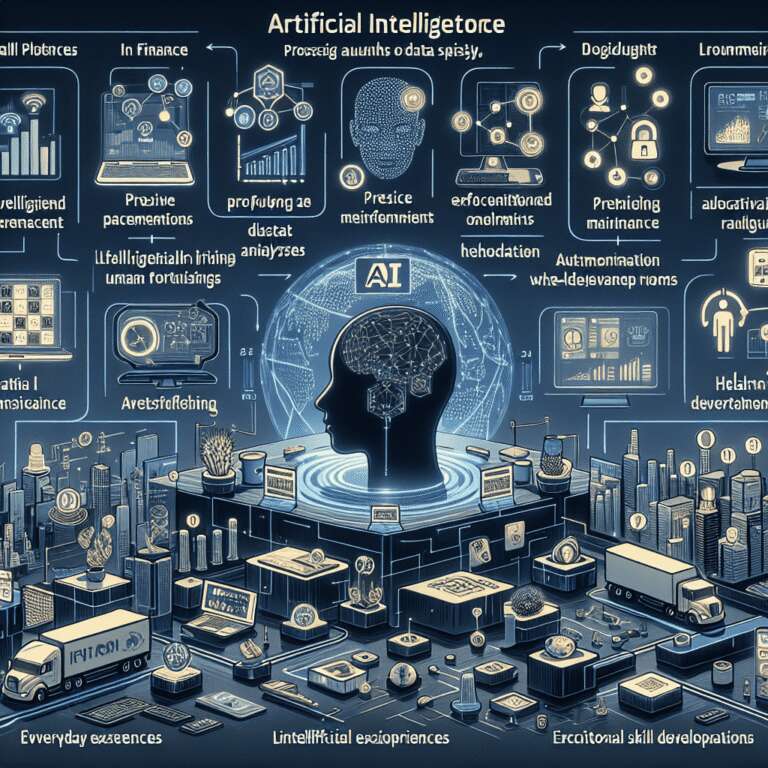
As businesses and individuals look ahead to 2025, Artificial Intelligence stands at the forefront of innovation, driving significant transformation across a variety of sectors. In finance, advanced tools like Kensho, developed by S&P Global, are leading a new era of predictive analytics. These systems analyze vast datasets and evaluate market risks with unprecedented speed and accuracy, outpacing traditional human analysis and facilitating faster, more informed investment decisions. This marks a pivotal shift, with companies increasingly relying on Artificial Intelligence to identify emerging trends, mitigate financial risks, and stay competitive.
The impact of Artificial Intelligence extends deeply into logistics, where companies are leveraging intelligent platforms to optimize supply chains, streamline operations, and enhance delivery precision. Through real-time data analysis, predictive maintenance, and automated routing, logistics providers are cutting costs while improving efficiency. These advancements not only ensure faster delivery but also contribute to sustainability goals with resource optimization and reduced waste. The integration of Artificial Intelligence in logistics is setting a new industry standard for operational excellence and customer satisfaction.
Beyond the corporate sphere, Artificial Intelligence is revolutionizing career trajectories and everyday experiences. Businesses are deploying intelligent tools in hiring, skill development, and performance evaluation, reshaping workforce expectations and creating new opportunities for reskilling. In daily life, consumer tools powered by Artificial Intelligence are becoming ubiquitous, offering personalized recommendations, automating routine tasks, and enhancing productivity. From virtual assistants to predictive health apps, the pervasive influence of Artificial Intelligence promises improved quality of life and productivity for people in all walks of life. As 2025 approaches, monitoring the evolution of these tools and trends will be crucial for organizations and individuals seeking to thrive in an increasingly intelligent world.