Researchers at the international institute of information technology, hyderabad are using Artificial Intelligence to transform how sleep disorders such as insomnia, sleep apnea, and narcolepsy are diagnosed, moving away from labor-intensive and error-prone manual analysis. Prof s bapi raju outlined how automatic classification of sleep stages is central to better diagnosis, since sleep quality is closely tied to cardiovascular diseases, diabetes, obesity, cognitive decline, and mental health conditions like anxiety and depression. Traditional diagnosis depends on polysomnography, where experts manually score sleep stages from eeg signals, which is time-consuming and can introduce inconsistencies that Artificial Intelligence models aim to reduce.
The work focuses on sleep stage classification, where sleep is divided into nrem stages n1, n2, n3 and rem, each with specific brain wave patterns that can be captured and distinguished by deep learning models. Convolutional neural networks and recurrent neural networks are being used in supervised learning setups with annotated datasets, while unsupervised and self-supervised techniques can detect patterns in unlabeled data. The institute’s muleeg, described as a multi view self supervised learning method, has outperformed earlier baselines, and the article states that muleeg delivered an 8x increase in training efficiency, which strengthens the case for Artificial Intelligence driven approaches in clinical workflows.
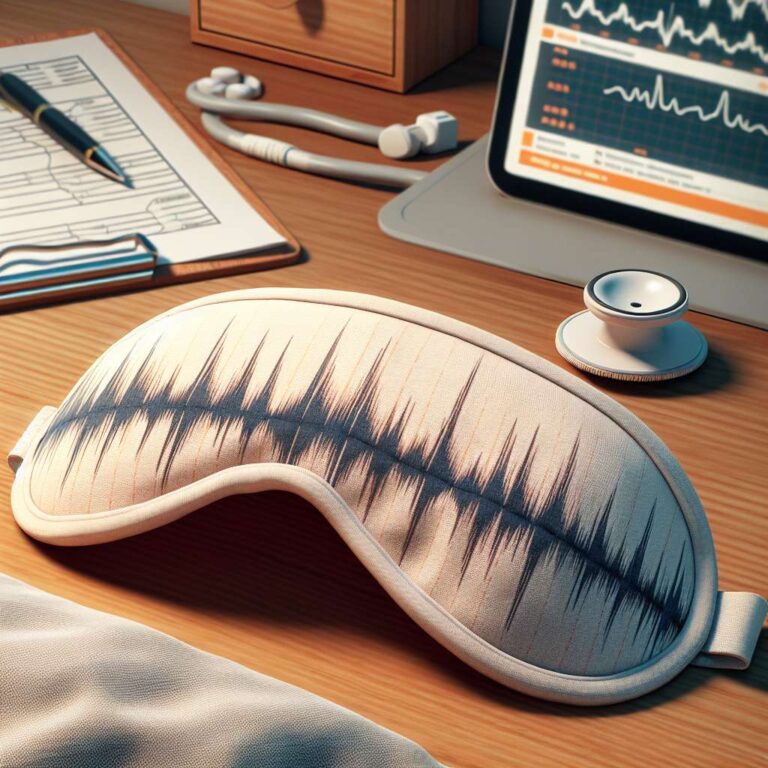
Beyond algorithms, iiith is targeting practical, patient friendly tools through wearable innovations that bypass many limitations of current consumer sleep trackers. The team has built an eog based wearable mask that tracks eye movements and uses electrode based sensors to collect multi channel data for real time sleep stage classification. This device is presented as non intrusive, portable, and suitable for home based monitoring, and it is designed to handle inconsistent data quality across diverse populations while still offering clinically reliable readings. In parallel, iiith and the nimhans neurology department created the indian sleep stroke dataset, called isleeps, which is hosted at ihub data, iiit h and contains polysomnography recordings and clinical annotations of 100 ischemic stroke patients, most of who suffer from sleep disorders, assembled under strict ethical and anonymisation protocols to support Artificial Intelligence models tailored to the indian population.
The isleeps resource is intended for use by researchers worldwide to uncover unique risk factors and patterns that shape sleep health, particularly in stroke patients, and to compare findings across regions. The article notes that iiith’s research shows eog signals processed through Artificial Intelligence models can accurately classify sleep stages, which supports the development of fully non intrusive, home based diagnostic tools. Future work may integrate additional physiological data streams such as heart rate and respiratory rate to increase diagnostic precision and make devices more comprehensive. Prof raju is quoted as saying these advances not only improve diagnostic capabilities but also create opportunities for international collaboration in sleep medicine, positioning india as an emerging hub for sleep research, wearable health technology, and community focused healthcare innovation that leverages Artificial Intelligence.