
Artificial Intelligence robot fingertip sensing seen as next edge breakthrough

Artificial Intelligence robot computing is expected to move increasingly toward edge devices, with dexterous robotic hands emerging as a key endpoint. Industry attention is focusing on fingertip sensing as the next major area for robotics progress.

Artificial Intelligence robot computing power is expected to shift significantly toward edge devices. Dexterous robotic hands are poised to play a critical role as the core endpoint in that transition, reflecting a broader push to move intelligence closer to where machines physically interact with the world.

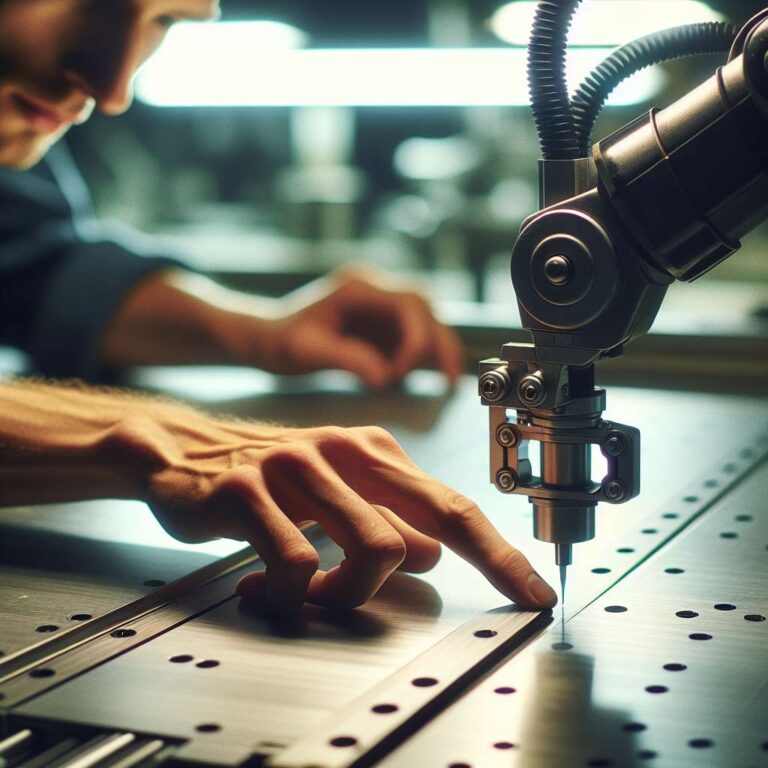
Industry experts see the next major breakthrough in Artificial Intelligence robotics coming from fingertip sensing. That focus highlights the growing importance of robots not only processing information, but also acquiring fine-grained tactile input at the point of contact. In this view, robotic hands are becoming central to future system design because they connect edge computing capability with real-world manipulation.

The available details point to a convergence of robotics, sensors, and edge computing within the ICT manufacturing landscape. Related categorization around MEMS, robot, robotics, and sensor technologies suggests that tactile sensing components are being treated as an important enabling layer for more capable robotic systems. The emphasis on dexterity also indicates that performance gains are expected to come from improving how robots sense and respond through their fingertips rather than relying only on centralized computing power.

The broader theme is a shift in where value will be created in Artificial Intelligence robotics. As computing moves outward to edge devices, the combination of sensing, manipulation, and local processing is becoming more important. Dexterous hands and fingertip sensing are now being framed as a likely trigger for the next phase of robotics development.
52

Impact Score

Anu Bradford on tech sovereignty and regulatory fragmentation

Anu Bradford argues that Europe is wavering in its role as the world’s digital rule-setter just as governments everywhere move toward more state control over technology. Global companies are being pushed to treat geopolitical risk, data sovereignty, and Artificial Intelligence governance as core strategic issues.

Mistral launches text-to-speech model

Mistral has expanded its Voxtral family with a text-to-speech system aimed at enterprise voice applications. The company is positioning the open-weights model as a flexible alternative for organizations that want more control over deployment, cost and customization.

UK Parliament opens workforce inquiry on Artificial Intelligence

A UK Parliament committee is examining how Artificial Intelligence is changing business and work, with a focus on both economic opportunity and labour disruption. The inquiry is seeking evidence on government priorities as adoption expands across the economy.

Windows 11 tightens kernel trust for older drivers

Microsoft is changing Windows 11 kernel policy so new drivers must be signed through the Windows Hardware Compatibility Program. Older trusted drivers will still be allowed in some cases to preserve compatibility during the transition.

Contact Us

Got questions? Use the form to contact us.

Contact Form

Clicking next sends a verification code to your email. After verifying, you can enter your message.