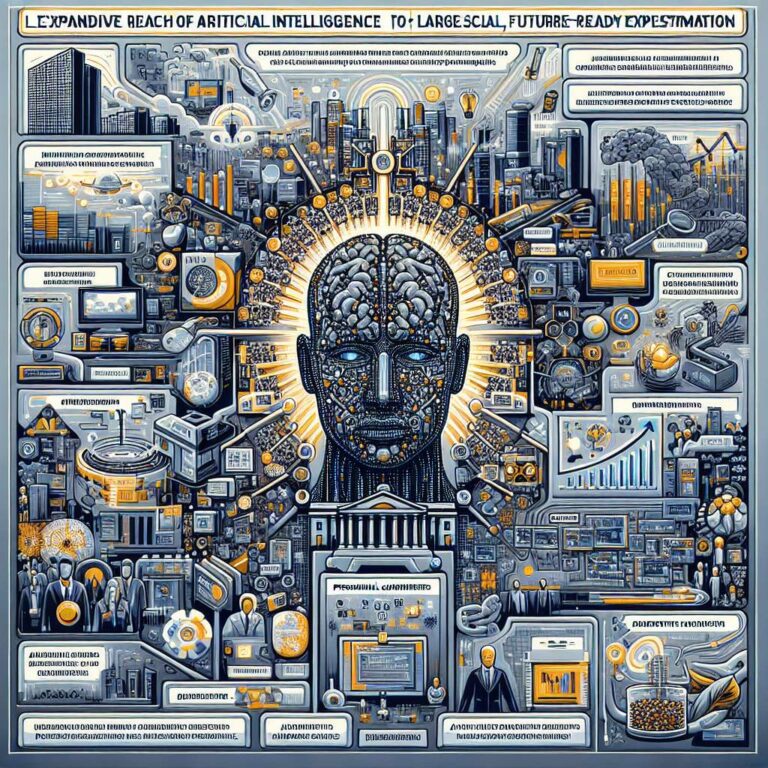
The article argues that the convergence of Artificial Intelligence, digital transformation, and other exponential technologies has shifted organizations from experimentation to implementation. The author frames this as a decisive moment where future readiness becomes a requirement, not an option, as deployments now span consumer experiences, enterprise operations, and national security.
On the infrastructure and defense fronts, the post cites NDTV Profit reporting that AMD shares rose 35 percent in pre-market trading after a multibillion-dollar partnership with OpenAI, positioning chip strategy at the core of scaling Artificial Intelligence. In parallel, Juvare’s Unified Command Platform earned “Awardable” status in the Department of Defense’s Chief Digital and Artificial Intelligence Office Tradewinds Solutions Marketplace. The designation signals that Artificial Intelligence-driven command-and-control systems are being cleared for procurement pathways that support cybersecurity, emergency response, and military operations.
Security automation is another highlight. Google DeepMind unveiled CodeMender, an Artificial Intelligence agent that autonomously detects, patches, and rewrites vulnerable code to prevent future exploits. Framed as a response to human limitations in hunting and fixing software flaws at scale, the capability points to a new class of tools designed to harden digital infrastructure and streamline development workflows.
Consumer and marketing technologies feature heavily. Stitch Fix introduced “Stitch Fix Vision,” which generates personalized imagery of a customer’s likeness in shoppable outfit recommendations, advancing immersive retail. Circana’s Enhanced Marketing Foresight marries advanced Artificial Intelligence with a redesigned user experience to make marketing mix modeling more intuitive, enabling real-time simulations and optimization. The piece also notes global collaboration signals from the Uganda-UK Health Summit, where partnerships among policymakers, health professionals, and development groups are positioned as a catalyst for scaling technology-enabled healthcare.
The broader context includes a caution that headline investment claims can be overstated even as capital flows into technology and infrastructure accelerate. The article highlights cross-disciplinary breakthroughs, such as Artificial Intelligence analysis used to interpret prehistoric remains indicating leopard attacks on Homo habilis, underscoring how data-driven methods are reshaping historical research. It also points to the Micheaux Film Festival’s 2025 slate of 36 world premieres at The Culver Theater in Culver City as a reminder that human creativity remains central while technology augments outcomes.
The author concludes that organizations are entering a scaling phase where Artificial Intelligence becomes production-ready and mission-critical. Success, the piece argues, depends on future readiness anchored in strategy, skills, and systems, and guided by Artificial Intelligence ethics and human-centered design. Rather than replacing people, the trajectory emphasizes augmenting human capability to secure software, personalize commerce, protect nations, and deepen understanding of the past.