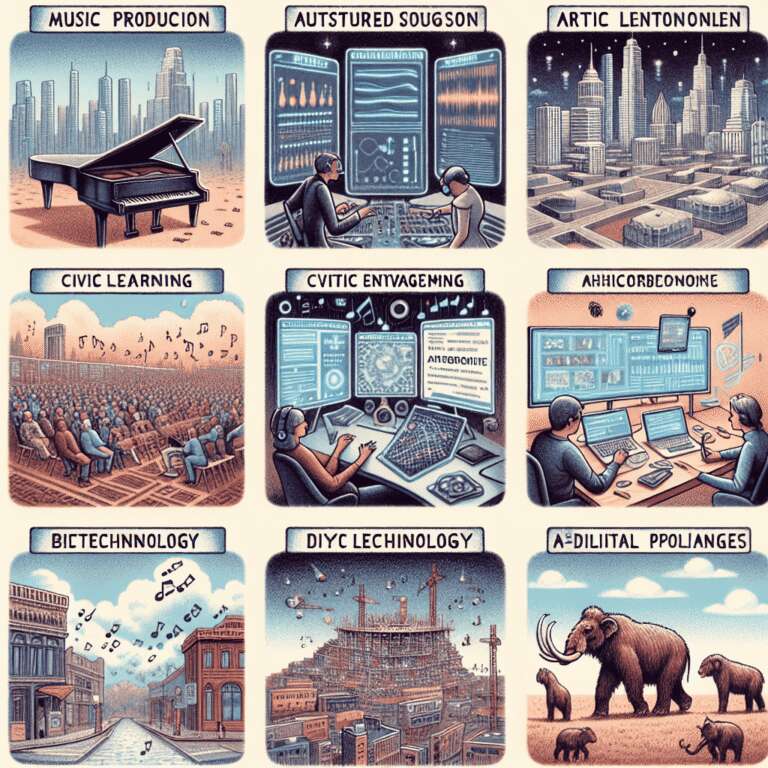
Recent advancements in Artificial Intelligence are reshaping the creative industries, most notably music. Unlike the large language models that have gained popularity for generating text, diffusion models are now capable of producing original music tracks from random noise, guided by prompts and data inputs. These models can create songs that spark genuine emotional responses, challenging traditional notions of authorship and creativity in an industry already grappling with questions of originality. This marks a pivotal shift in music production, adding urgency to ongoing debates over how creative content should be defined and protected in the age of machine learning.
Artificial Intelligence´s influence is also extending into the democratic process at the local level, as shown by an experiment in Bowling Green, Kentucky. The city launched an online platform powered by machine learning, allowing its 75,000 residents to submit and vote on ideas for their city’s future 25-year plan. This platform, Pol.is, collected short, anonymous proposals from community members, who then voted on which suggestions best captured their vision for the future. While the initiative represents a novel approach to civic engagement using technology, it raises concerns among researchers regarding the reliability of such digital input as a true reflection of public sentiment.
In parallel with these developments, biotechnology companies like Colossal Biosciences are pushing the boundaries of genetic engineering, with ambitions not only to revive extinct species such as the woolly mammoth but to secure patents that could grant them exclusive rights to these organisms. This move aims to establish a legal framework for managing the reintroduction of de-extinct species, foregrounding complex questions about ownership and ethical oversight of emergent biotechnologies. These diverse stories underscore the accelerating entanglement of Artificial Intelligence and technology with creativity, governance, and even the fabric of natural life.