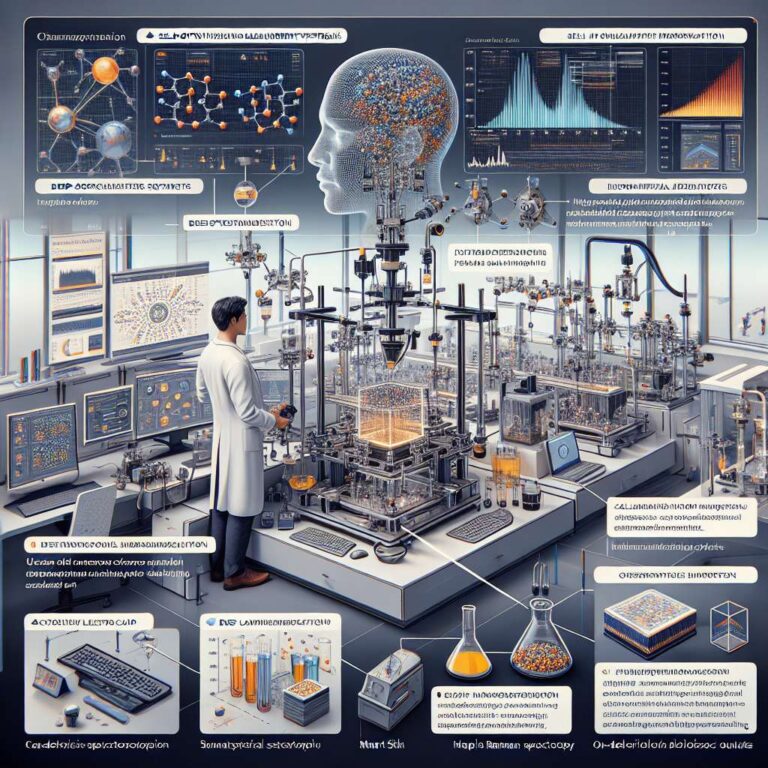
The article reviews how Artificial Intelligence in 2025 marked a turning point for vibrational spectroscopy, shifting the field from classical chemometrics into predictive, autonomous, and uncertainty-aware modeling across Raman, infrared, near-infrared, and hyperspectral imaging. Legacy tools such as PCA, PLS, and MLR are now tightly integrated with deep neural networks, convolutional architectures, transformers, quantile regression forests, and multimodal fusion systems. The author describes new software platforms like SpectrumLab and SpectraML, which use generative models, foundation architectures, and physics-informed neural networks to automate feature extraction, calibration transfer, and real-time model updating. A core theme is that spectroscopic instruments are evolving from passive recorders into intelligent, self-optimizing systems that can interpret raw data cubes within milliseconds while providing actionable uncertainty estimates for decision-making.
Across application domains, Artificial Intelligence is shown transforming environmental, agricultural, biomedical, and industrial spectroscopy into more scalable and field-ready workflows. In environmental analysis, Raman spectral imaging combined with CNN-based classification delivers fast, selective microplastic fingerprinting, supported by practical tutorials that systematize feature extraction and classifier deployment. Quantile regression forests are applied to diffuse-reflectance soil spectroscopy so that models estimate both a mean prediction and its statistical confidence, enabling risk-aware decisions for soil management. Agricultural work includes drone-based hyperspectral sensing to estimate deep soil moisture at 10-30 cm depth and mid infrared spectroscopy with CNNs to separate particulate from mineral-bound soil organic carbon, directly supporting climate and emissions tracking. Remote sensing studies fuse satellite spectroscopy with machine learning to infer indicators such as chemical oxygen demand, total phosphorus, ammonia-nitrogen, and dissolved oxygen in river systems, illustrating geospatial, cloud-based pollutant monitoring.
Biomedical and industrial examples highlight how Artificial Intelligence-augmented vibrational methods are moving into clinics, wearables, and factory floors. Surface-enhanced Raman spectroscopy platforms enhanced with neural networks improve analyte sensitivity, denoising, and heterogeneity analysis for next-generation diagnostics, including “smart skin” wearable sensors that continuously track biomarkers and physiological states. Artificial Intelligence-interpreted Raman spectra support precision cancer immunotherapy by mapping tumor microenvironments for treatment selection, while SERSome software authenticates medicinal and edible homologs to reduce counterfeiting and toxic substitutions. In industrial biotechnology, dual NIR-Raman monitoring combined with Artificial Intelligence feedback optimizes gentamicin fermentation, shortening manufacturing cycles, reducing waste, and improving throughput, and NIR hyperspectral imaging with CNNs is explored for remote explosive and hazardous chemical detection. Looking forward, the article emphasizes explainable Artificial Intelligence tools such as SHAP and Grad-CAM, physics-informed neural networks, self-driving spectroscopic laboratories, multimodal fusion, generative diffusion models, and spectroscopy-generalist large language models capable of zero-shot interpretation across modalities, arguing that 2025 may be remembered as the year vibrational spectroscopy began to mature into an autonomous, foundation-model-driven analytical science.