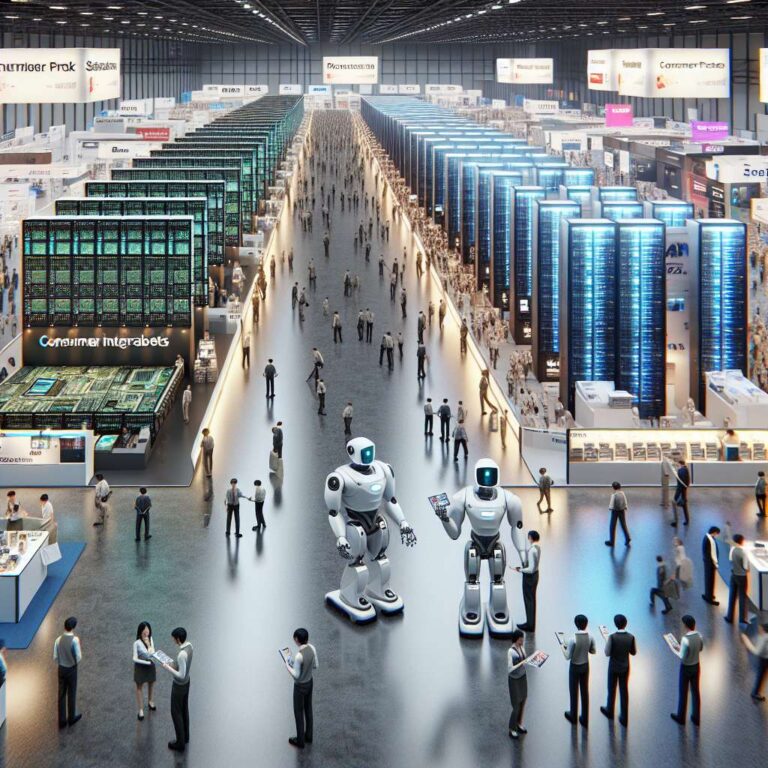
CES 2026 in Las Vegas has been dominated by Artificial Intelligence, chips, and robots, with thousands of attendees crowding the Las Vegas Convention Center to see what the tech industry has in store. Artificial Intelligence branding is ubiquitous across the show floors, appearing on everything from televisions and PCs to smartphones and even toilets, as generative Artificial Intelligence and physical Artificial Intelligence robots continue to attract heavy investment from major technology companies. The event features both products that will eventually reach consumers and experimental concepts that may never leave the convention center.
Google is using the show to highlight how its Gemini 3 model will integrate into the Google TV operating system, enabling natural language search for content and new image editing and saving features for TV screensavers. Samsung unveiled its Galaxy Z Trifold in the US with onboard Artificial Intelligence capabilities, while a wide range of Artificial Intelligence-powered wearables, including glasses and rings, underline how pervasive the technology has become. On the chip front, Nvidia CEO Jensen Huang used a Jan. 5 keynote to launch the Vera Rubin platform, which features six new chips, including the Vera CPU, Rubin GPU, and four networking and storage chips, and Huang said Vera Rubin has a 10x improvement in throughput versus the company’s Grace Blackwell platform and provides a 10x reduction in token costs. He also pointed to Nvidia’s library of open Artificial Intelligence models, including the Alpamayo self-driving car model designed to help vehicles understand complex scenarios such as a child chasing a ball into the street.
Advanced Micro Devices CEO Lisa Su detailed the upcoming Helios rack-scale system for its Instinct MI445X GPU and previewed next-generation MI500 chips, and Su said Helios is the world’s “best AI rack” and that both systems will run 72 massive AI chips per rack, setting up a direct comparison with Nvidia’s offering. AMD also revealed upcoming Artificial Intelligence PC chips, while Intel introduced its Core Ultra Series 3 Artificial Intelligence PC processors, now up for presale, and Qualcomm showed its Snapdragon X Plus 2 chip for Artificial Intelligence PCs, forming a three-way competition for consumer and enterprise spending. All four chipmakers outlined expanded robotics strategies built on their respective platforms, with Nvidia demonstrating a cowboy hat-wearing humanoid, a surgical robot simulator, and a check-in assistant bot; AMD showcasing Generative Bionics’ GENE.01 humanoid powered by its processors; Intel featuring Oversonic Robotics’ RoBee humanoid using Core Ultra 3 chips; and Qualcomm unveiling its Qualcomm Dragonwing IQ10 series for robotics and partnerships with companies like Figure and VinMotion to power humanoid robots. Hyundai and Boston Dynamics added to the robotics momentum by announcing that Hyundai plans to build a value chain for mass robot production and that the Atlas humanoid robot will begin working in Hyundai factories beginning in 2028.