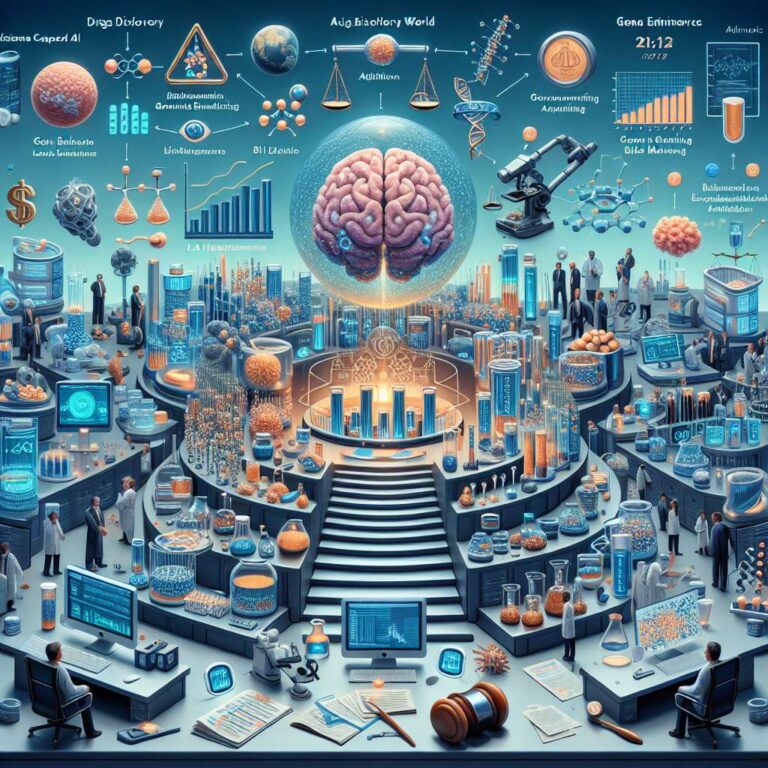
Drug Discovery World’s exclusive coverage for late 2025 and early 2026 focuses on how artificial intelligence and other frontier technologies will alter drug discovery, development, and commercialization. A series of forward-looking pieces by industry commentators such as Diana Turner and others explores what will change in preclinical discovery and clinical trials in 2026, how regulators may respond, and which drug modalities and geographic markets are likely to be most influential. Contributors describe a sector entering a period of recalibration after volatile years, with attention split between scientific breakthroughs, capital market dynamics, and the operational realities of running biotech and biopharma companies.
Multiple articles examine the deepening role of artificial intelligence across the pipeline. One analysis describes how the role of artificial intelligence in drug discovery is expected to significantly increase in 2026 and beyond, with research leaders forecasting an approaching tipping point for its adoption. Other features explain how emerging artificial intelligence driven technologies are being used for indication expansion, drug repurposing, and to uncover hidden cause and effect patterns in biomedical data. There is also detailed discussion of how artificial intelligence is transforming gene synthesis and genome engineering, and how advances in artificial intelligence together with synthetic biology are redefining genomics driven drug discovery. A sponsored interview on so called third generation electronic lab notebooks links large language models and generative artificial intelligence to new expectations for digital infrastructure in laboratories.
Beyond artificial intelligence, the editorial line up highlights several scientific and clinical themes set to shape 2026. Separate deep dives address the outlook for cell and gene therapies after a mixed 2025, with emphasis on in vivo approaches, greater specificity, and next generation platforms, as well as the emergence of autotaxin inhibition as a potential new frontier in oncology and liver disease. Round ups from major meetings such as the American Society of Hematology 67th Annual Meeting in December 2025 track early stage clinical results in haematology, while other pieces review key breakthroughs and most read topics from 2025, ranging from the first use of CAR T therapy for ulcerative colitis to quantum computing and ion channel discovery. Legal and capital market angles are covered through analysis of proactive disclosure risks for public pharma companies and impressions from the 2026 JPM healthcare conference, where buoyant stock indices contrast with lingering questions about business robustness. The Winter 2025/2026 digital magazine issue ties these threads together, examining advances in blood cancer drug development, regional life sciences strategies, the future of drug discovery, active immunotherapies for neurodegeneration, and the legal implications of artificial intelligence in research.