
Airtable Launches Revolutionary Airtable Assistant

Airtable introduces its Airtable Assistant - a powerful tool that leverages Artificial Intelligence to enhance data management.

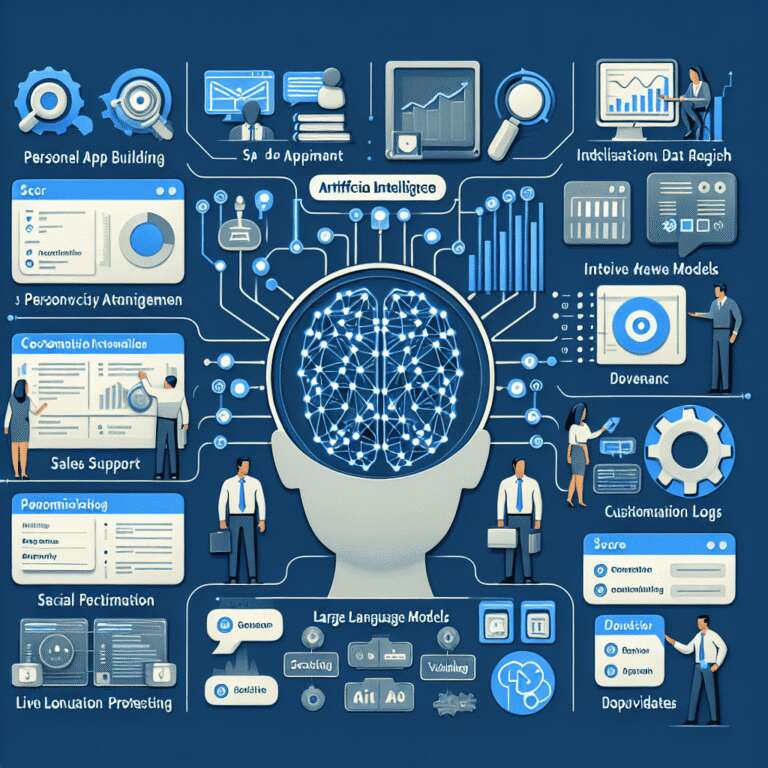
Airtable has unveiled its latest offering, the Airtable Assistant, which aims to revolutionize how users interact with data through Artificial Intelligence. This tool is designed to function as a personal app builder, data analyst, and web researcher, all in one, allowing users to gain insights and streamline processes simply by making inquiries.

The Airtable Assistant is built to handle complex data queries by connecting multiple data points. It can analyze vast amounts of information such as sales calls, support tickets, product feedback, and social media data, offering actionable business insights in real-time. Additionally, the Assistant can scan documents for important details, creating workflows that are repeatable and scalable for contracts, invoices, and reports.

For enterprise customers, Airtable empowers them with the choice of a range of Large Language Models (LLMs) from providers like OpenAI and Anthropic, hosted via Amazon Bedrock. This feature enables organizations to maintain control over their data´s security and the operational usage of Artificial Intelligence within their workflows. Airtable has positioned this tool as accessible even to those with no prior AI experience, allowing teams to quickly integrate AI capabilities into their existing workflows.
62

Impact Score

Pope Leo frames Artificial Intelligence as a media power struggle

Pope Leo XIV’s first encyclical casts Artificial Intelligence as a moral question of power, labor, and collective responsibility, offering publishers a framework for negotiating with technology companies. The broader media landscape is also shifting as AP supplies election data to ChatGPT, YouTube expands labeling of Artificial Intelligence video, and search traffic declines for publishers.

Why the U.S. leads Europe in Artificial Intelligence adoption

Survey evidence shows U.S. workers and firms are adopting Artificial Intelligence faster than their European counterparts. The gap appears to be driven not only by workforce composition, but also by stronger managerial support and greater workplace encouragement to use the technology.

FluxMem brings dynamic memory to large language model agents

FluxMem reframes memory for large language model agents as a dynamic graph that evolves with feedback, task variation, and long-term use. The approach is designed to reduce the brittleness of static memory systems and improve reliability in complex environments.

Microsoft and NVIDIA hint at N1X Windows 11 launch

Microsoft and NVIDIA signaled a joint Windows 11 push around the N1X, framing it as a new era of PC. The upcoming Arm chip is positioned to bring Copilot+ acceleration and challenge the fastest Windows processors in its class.

Contact Us

Got questions? Use the form to contact us.

Contact Form

Clicking next sends a verification code to your email. After verifying, you can enter your message.