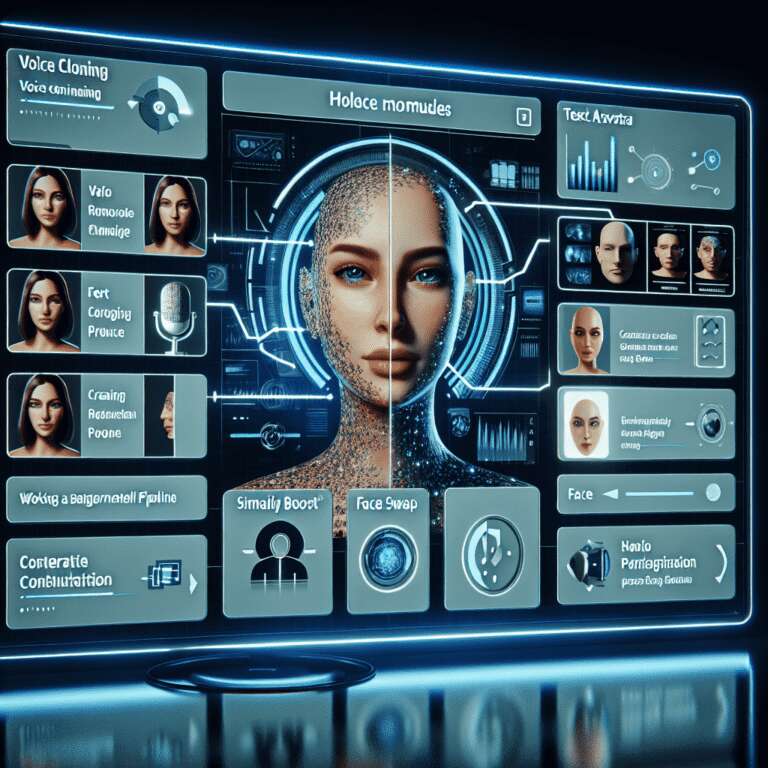
A2E has announced a substantial update to its digital avatar content creation platform, rolling out a suite of new features aimed at content creators and digital artists. The platform now dramatically reduces the cost of generating image avatars from 100 credits down to just 30 credits, allowing users to triple their creative output on the same budget. This update empowers creators to experiment more freely without financial constraints, unlocking greater levels of visual storytelling and online expression.
The upgraded Voice Cloning module further enhances flexibility and quality for users. The system now supports popular video formats such as MP4 and MOV, enabling audio extraction directly from video files for avatar dubbing or audio mixing. Additional tools include one-click background noise and music removal, delivering clearer, more professional-sounding synthetic voices. A new beta feature, Similarity Boost, leverages advanced algorithms to create highly realistic voice clones, significantly narrowing the gap between human and Artificial Intelligence-generated speech.
Efficiency for creators also receives a boost with the streamlined Text-to-Avatar workflow. After designing a text-based avatar, users can instantly convert it into an image avatar with a single click, ideal for producing social media visuals or adapting avatars for various digital contexts. Meanwhile, enhancements to the Face Swap function allow any uploaded image—such as a selfie or themed photo—to serve as a base for personalized avatar creation. Collectively, A2E’s latest updates underline a commitment to user empowerment, enabling a new level of creativity by solving production pain points and broadening the creative toolkit for anyone working with Artificial Intelligence-driven avatars.