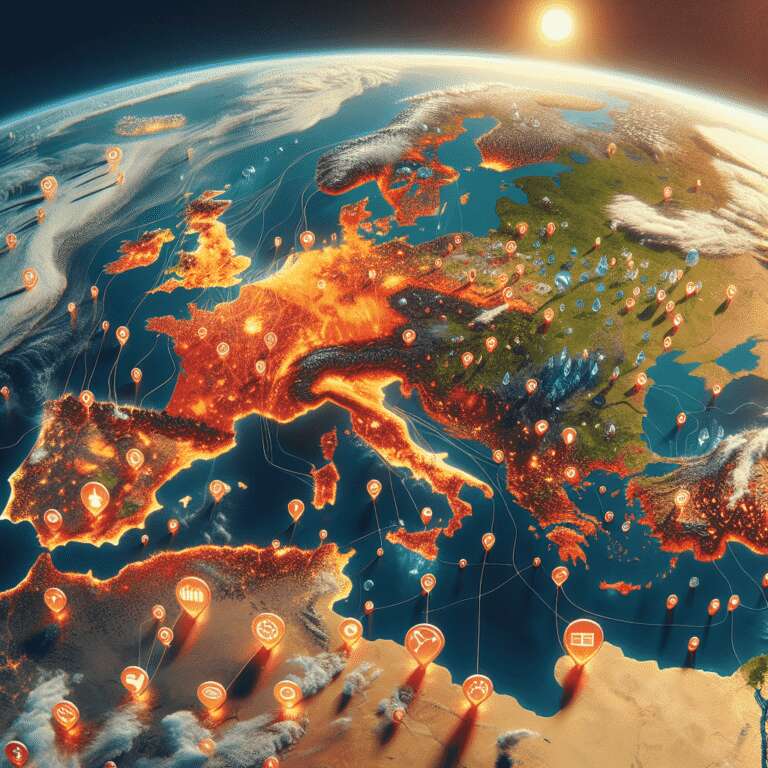
The latest European State of the Climate Report reveals that 2024 was the warmest year ever recorded in Europe, underscoring the continent´s status as the fastest-warming region on the planet. The report highlights a historic number of extreme heat days, a surge in tropical nights, and widespread severe flooding events. Researchers and policy-makers view these findings as a stark signal of the urgent need to strengthen efforts in climate adaptation and resilience.
Extreme weather phenomena, such as persistent heatwaves and heavy rainfall, affected large swathes of Europe throughout the year. Floods in Spain´s Valencia region and increasing water levels in Eastern Europe have placed millions of residents at risk, with approximately 12 percent of the continent´s population living near flood-prone rivers. In response, the European Union has accelerated the deployment of digital smart sensor networks in countries like Poland and Slovakia to monitor water levels, soil conditions, and atmospheric data in real time, supporting the mitigation of flash flood impacts and better protecting vulnerable communities.
As the climate crisis reshapes the continent, the European Union is simultaneously addressing external matters, such as trade disputes with the United States, while prioritizing environmental issues at the highest political level for the years 2024–2029. European officials stress the importance of cohesive actions across member states—ranging from innovations in disaster detection and response to negotiations on global trade that factor in environmental policies. The report concludes with a call for continued and increased investment in sustainable infrastructure and cross-border resilience to safeguard Europe’s future in a rapidly changing climate.