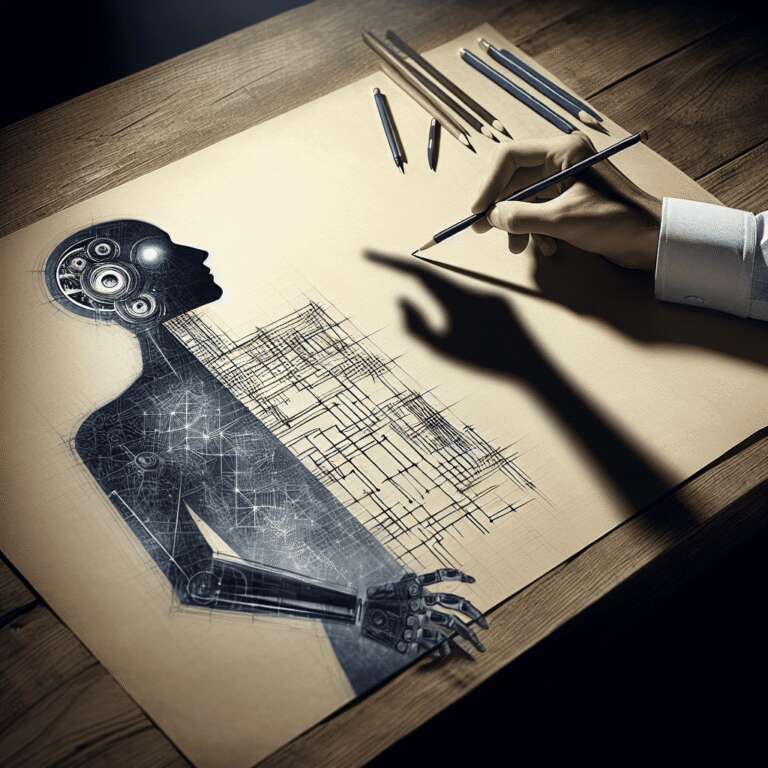
Artificial Intelligence (AI) is increasingly integral to scientific research, showing remarkable capabilities in fields such as drug discovery, genomics, and astronomy. It accelerates discoveries by processing large datasets, recognizing patterns, and making predictions that might be challenging for human researchers. Significant advancements include AI models discovering new antibiotics, unraveling protein structures, and predicting climate change scenarios.
Despite these achievements, the question remains whether AI can truly ´think outside the box´ and generate original, creative insights like humans. AI excels at identifying trends and generating solutions based on data, yet lacks the intuition and creativity inherent to human thought processes. While AI´s creativity is bounded by data constraints, it does showcase certain capabilities in producing innovative solutions that push scientific boundaries.
While some believe AI has the potential for creativity, its utility currently rests more on its role as a partner to human researchers rather than an independent innovator. The most fruitful scientific breakthroughs are anticipated from a synergy of AI´s analytical prowess and human creativity. This collaboration may revolutionize research, opening new pathways in scientific exploration, provided that AI supports human efforts ethically and transparently.